Cappadocia Adventures
Cappadocia Adventures

As you've probably noticed from the previous dishes, we absolutely love our dough-based specialties!
And Kayseri Yağlama is one of the best examples.
The preparation begins by rolling out soft dough into thin, round flatbreads. Each piece is cooked separately before being layered with a rich sauce made from seasoned minced meat, tomatoes, and onions.
The process continues until a delicious stack of flatbreads and meat sauce is formed.
The dish is then sliced into portions and traditionally served with garlic yogurt.
And here's the fun part: eating it neatly can be almost as challenging as preparing it!
Messy? Maybe. Delicious? Absolutely!
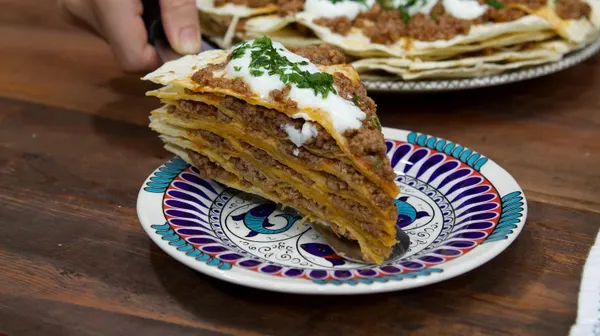
Layers of freshly baked flatbread, juicy minced meat, and a generous serving of garlic yoghurt. Welcome to one of Kayseri's most beloved traditional dishes!
Kayseri Yağlama is prepared by stacking thin, freshly cooked flatbreads, locally called şebit, with a rich mixture of minced meat, onions, tomatoes, peppers, and aromatic spices.
The dish has its roots in Kayseri's traditional countryside cooking, where local families prepared flatbreads on a heated metal griddle known as a sac.
Today, Kayseri Yağlama remains an important part of the region's culinary heritage
Ingredients
Flatbread Dough (Şebit)
Wheat flour
Dry yeast
Warm water
Olive oil
Plain yoghurt
Sugar
Salt
Meat Filling
Minced meat (commonly beef)
Onions
Fresh tomatoes
Green peppers
Tomato paste
Red pepper paste
Olive oil
Black pepper
Ground red pepper
Salt
Water
Yoghurt Sauce
Plain Turkish yoghurt
Garlic (optional)
1. Preparing the Dough
The preparation begins by mixing wheat flour, yeast, warm water, olive oil, yoghurt, sugar, and salt. The ingredients are kneaded into a soft, smooth dough and left to rise for approximately 40 minutes.
2. Rolling and Cooking the Flatbreads
Once the dough has risen, it is divided into small portions and left to rest briefly. Each portion is rolled into a round, thin flatbread.
Traditionally, the flatbreads are cooked on a hot metal griddle (sac), although a large frying pan can also be used. They are cooked on both sides until lightly browned and kept covered to preserve their softness.
3. Preparing the Meat Filling
Minced meat is lightly sautéed in olive oil before finely chopped onions are added. Green peppers, tomato paste, and red
pepper paste are then incorporated into the mixture.
Freshly grated tomatoes, salt, black pepper, ground red pepper, and a little water are added. The mixture is simmered until the ingredients combine into a rich, juicy meat sauce.
4. Building the Layers
Here comes the most distinctive part!
A freshly cooked flatbread is placed on a large serving plate and covered evenly with the prepared meat filling.
Another flatbread is placed on top, followed by another layer of meat sauce. The process continues until a beautiful stack of alternating flatbread and meat layers is formed.
The juicy filling gradually softens the flatbreads, bringing all the flavours together.
5. Serving the Kayseri Way
Once assembled, the stack is traditionally cut into four equal sections and served warm.
Plain or garlic-infused Turkish yoghurt accompanies the dish, balancing the richness of the meat filling.
Back then, opportunities were nowhere near as plentiful as they are today. You were either a good farmer or a good trader. Either way, there were no grocery stores where you could simply purchase your weekly or monthly food supplies.
These circumstances pushed Cappadocians to become resourceful, sustainable, and productive. Every ingredient mattered, and wasting food meant losing something that might be impossible to replace, especially during the harsh winter months.
So, how did they manage to survive?
The answer was beneath their feet: The soil.
For generations, wheat was one of the region's most valuable agricultural products. It could be cultivated, stored, ground into flour, and transformed into various foods that helped families survive throughout the year.
This reliance on wheat was nothing new. Its importance in Anatolian cuisine grew through centuries of agricultural traditions, while the use of thin, flatbreads was also closely connected to the food culture of Turkic nomadic communities that migrated from Central Asia.
Flatbreads became an essential part of Turkish cuisine, appearing in countless forms, including yufka, bazlama, and the breads used for lahmacun.
One of these breads was şebit, a thin, round flatbread that eventually became the foundation of a remarkable regional dish.
But bread alone was not always enough.
By combining layers of şebit with a rich mixture of minced meat, tomatoes, onions, and spices, locals created a filling and satisfying meal. Add a generous serving of yoghurt, another staple of Turkish food culture, and you have what we now know as Kayseri Yağlama.
The name itself reflects its origins. Kayseri refers to the city where the dish is traditionally associated, while yağlama comes from the Turkish word yağlamak, meaning "to oil" or "to grease," referring to the way the bread is coated with its flavorful filling.
However, the story of sustainability does not end in the kitchen.
Another important part of Cappadocian food culture was the region's vineyard and gardening traditions. From spring until autumn, families spent time in their vineyard houses, cultivating crops, preparing food, and preserving whatever they could for the months ahead.
During winter, when agricultural activity became limited, these carefully stored ingredients and preserved foods helped families endure the cold.
What began as a necessity eventually became a culinary tradition.
Today, Kayseri Yağlama is much more than layers of bread, meat, and yoghurt. It represents generations of resourcefulness, the value of agricultural traditions, and the remarkable ability of Anatolian communities to turn simple ingredients into something unforgettable.
What was once about surviving the winter is now something we proudly serve at the table.
Why just taste it when you can learn to make it yourself?
Join a traditional Turkish Cooking Class and discover the secrets behind this delicious Anatolian speciality!
Learn how to prepare the dough, cook the flavourful meat filling, and build those irresistible layers under the guidance of local cooking instructors.
And the best part? You get to enjoy the delicious meal you've prepared with your own hands!
Don't just taste the tradition. Become part of it!
1 guided tour includes a stop at A Pile Of The Most Delicious Blankets! Kayseri Yağlama.
Browse all Cappadocia attractions