Cappadocia Adventures
Cappadocia Adventures

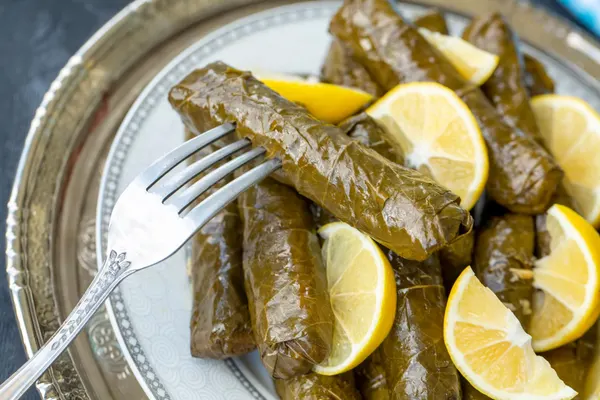
Sarma is one of the most beloved traditional dishes throughout Türkiye. However, Cappadocia has a special connection to this delicious food!
The region is famous for its vineyards and centuries-old winemaking heritage. But guess what? The grapes aren't the only valuable part of the vines!
Fresh grape leaves are collected and used to prepare this traditional dish, reflecting the region's resourceful approach to cooking. After all, why waste a perfectly good leaf when you can turn it into something delicious?
The leaves are carefully wrapped around a seasoned filling of bulgur, rice, or a combination of both, often mixed with tomato paste, onions, and aromatic spices.
Once rolled, they are arranged in a pot and slowly cooked until tender.
A wonderful example of how Cappadocia's vineyards contribute to both its wines and its cuisine!
And the best part? Every tiny roll carries a little piece of Anatolian culinary tradition.
The basic ingredients of traditional Turkish stuffed grape leaves include:
Grape leaves (fresh or preserved)
Rice or fine bulgur
Onion
Tomatoes or tomato paste
Red pepper paste
Parsley
Mint
Black pepper
Red pepper flakes
Salt
Olive oil
Depending on the family's recipe, minced meat, lemon juice, and other aromatic spices may also be added.
Making traditional Turkish Sarma requires patience, precision, and a delicate touch.
The technique involves wrapping a flavorful filling inside tender grape leaves and slowly cooking them until perfectly soft.
Sounds easy? Well, try wrapping fifty of them perfectly!
1. Preparing the Grape Leaves
Fresh grape leaves are briefly blanched in boiling water to soften them. If preserved leaves are used, they are rinsed thoroughly to remove excess salt.
In vineyard-rich regions like Cappadocia, tender grape leaves have traditionally been a valuable seasonal ingredient.
2. Preparing the Filling
Rice, bulgur, or a combination of both is mixed with finely chopped onions, olive oil, parsley, mint, and aromatic spices such as black pepper and red pepper flakes.
Depending on the regional recipe, minced meat, tomato paste, or pine nuts may also be added.
3. The Art of Wrapping
Here comes the tricky part!
A small portion of filling is placed in the center of each grape leaf. The sides are folded inward, and the leaf is rolled into a small cylinder.
The roll should be firm enough to hold together but not so tight that the rice cannot expand while cooking.
4. Arranging the Sarma
The wrapped grape leaves are carefully arranged in tight layers inside a cooking pot.
A few additional grape leaves may be placed at the bottom to prevent sticking.
5. Slow Cooking
Water, olive oil, and, depending on the recipe, lemon juice are added to the pot.
A heatproof plate is traditionally placed over the Sarma to keep the rolls from unfolding.
The Sarma is then simmered gently over low heat for approximately 35–60 minutes, depending on the filling and the tenderness of the leaves.
6. Resting and Serving
Once cooked, the Sarma is left to rest so the flavors can settle.
Olive oil-based Sarma is traditionally served at room temperature or chilled, often accompanied by fresh lemon slices. Meat-filled varieties are generally enjoyed warm, sometimes with yogurt.
The secret to delicious Sarma lies in three things: delicate wrapping, balanced seasoning, and patient cooking.
And perhaps a little wisdom passed down from an Anatolian grandmother!
Although Sarma is strongly associated with Turkish cuisine, similar dishes can be found across the Balkans, the Middle East, and the Eastern Mediterranean.
Different cultures have developed their own versions over centuries.
However, we still like to believe we're the best at making it!
Now, here's where Cappadocia enters the story.
The region's relationship with grape cultivation stretches back thousands of years, through the ancient civilizations of Anatolia, including the Hittite period.
Although it is difficult to determine exactly when grape leaves were first used for stuffing, the long history of vineyards in Cappadocia makes Sarma a wonderful connection between the region's agricultural heritage and traditional cuisine.
As Anatolian and Ottoman culinary traditions developed, stuffed vegetables and wrapped leaves became increasingly popular.
And eventually, those humble grape leaves became one of the most recognizable dishes of Turkish cuisine!
Following the settlement of Turkish communities in Anatolia, culinary traditions continued to evolve through interactions with local and neighboring cultures.
Vegetables, grains, herbs, and edible leaves became essential ingredients in many regional dishes.
Sarma and Dolma developed into an increasingly diverse family of preparations within Ottoman cuisine.
Here's where things get interesting!
The German traveller Hans Dernschwam mentioned stuffed grape leaves during his travels to Istanbul between 1552 and 1555.
He also recorded that fresh vine leaves were sold in Istanbul's markets specifically for preparing Sarma.
This tells us something important: by the mid-16th century, Sarma was already a familiar part of Ottoman food culture!
Historical records indicate that stuffed cabbage rolls were sold in Istanbul in 1640.
By 1660, similar dishes were served at dining gatherings in wealthy households.
Sarma was no longer simply about wrapping ingredients in leaves. It had become part of an established and diverse culinary tradition.
During the 19th century, Ottoman cookbooks documented different preparations of stuffed vegetables and leaves.
Recipes featured ingredients such as rice, onions, olive oil, aromatic spices, currants, and pine nuts.
One important historical reference is Mehmet Kâmil's 1844 cookbook, Melceü't-Tabbâhîn (The Refuge of Cooks), which includes recipes for stuffed grape leaves and other varieties of Dolma.
These culinary traditions helped shape the Sarma preparations enjoyed throughout Türkiye today.
Have you ever wondered why people decided to wrap their food in grape leaves?
Well, the answer is surprisingly practical!
There are several important reasons why grape leaves are preferred:
Flexibility: When blanched, they become soft and flexible, allowing them to be folded and rolled without tearing.
Durability: Their structure helps hold the filling together during cooking.
Thin Texture: They become tender when properly cooked, without forming a thick outer layer.
Suitable Vein Structure: Their natural veins provide enough strength to support the filling.
Aromatic Qualities: They give the dish its distinctive, slightly sour and herbaceous flavor.
And in Cappadocia, where vineyards have long shaped the landscape, using grape leaves is another example of making the most of what the land provides.
One vine, two wonderful traditions: wine in your glass and Sarma on your plate!
You can enjoy traditional Sarma at local restaurants throughout Cappadocia, particularly those offering authentic Anatolian home-style cuisine.
But why stop at tasting it when you can learn to make it yourself?
Join a traditional Cooking Class in Cappadocia!
Discover the secrets of Anatolian cuisine alongside local women who share traditional cooking techniques, family recipes, and the little tricks that make homemade food so special.
When Sarma is included in your cooking class menu, you can learn how to prepare the filling, soften the grape leaves, and master the delicate art of wrapping them by hand.
And of course, the best part comes afterward: eating what you've made!
Because in Cappadocia, food isn't just something you eat. It's something you experience, share, and remember.
Afiyet Olsun! – Enjoy Your Meal!
1 guided tour includes a stop at Another Way To Consume Grape Goods, Sarma!.
Browse all Cappadocia attractions