Cappadocia Adventures
Cappadocia Adventures

Nature, History, Geology, Ancient Civilizations, and a Little Underground Madness!
Welcome to the Green Tour, where the extraordinary landscapes of Cappadocia are only the beginning of your adventure!
Now, let's get something straight.
Cappadocia isn't an ordinary destination.
It's a place where ancient people decided that building houses above the ground was simply not adventurous enough.
So what did they do?
They carved entire settlements underground!
And just when you thought that was impressive, they also built churches inside mountains, created beautiful works of art on cave walls, and found brilliant ways to survive in a challenging environment.
Talk about taking creativity seriously!
But before we head underground, we have some extraordinary places to discover above the surface.
From breathtaking panoramic viewpoints and fascinating pigeon houses to ancient monasteries, traditional stone craftsmanship, and peaceful Byzantine valleys, the Green Tour introduces you to a completely different side of Cappadocia.
While the Red Tour focuses on the region's iconic fairy chimneys and famous historical landmarks, the Green Tour takes you deeper into the region's religious heritage, rural traditions, remarkable architecture, and underground civilizations.
And when we say deeper, we mean literally!
Because one of the most extraordinary experiences of your journey is waiting beneath your feet.
But don't worry.
We aren't sending you underground without lunch!
So bring your curiosity, your sense of adventure, and perhaps a little courage.
Cappadocia has spent millions of years preparing this experience. The least we can do is show up!
Your day begins with a warm welcome from your professional tour guide at your hotel.
Before setting off, your guide will introduce you to the day's itinerary and provide a brief overview of the extraordinary places you're about to discover.
And trust us, there's quite a lot to talk about!
During the journey, you'll learn how volcanic activity shaped Cappadocia, why ancient civilizations chose to settle in this unusual landscape, and how local communities developed remarkable ways of living with the natural environment.
But we promise not to turn your holiday into a university lecture!
After all, you've come to Cappadocia to experience something extraordinary, not to sit through an unexpected history exam.
Your guide will bring these fascinating stories to life as you travel through the region.
And our first destination?
One of the best places to understand why Cappadocia is unlike anywhere else on Earth.
Welcome to Göreme Panorama!
Before we begin exploring ancient settlements and mysterious underground cities, let's enjoy one of the most magnificent views in Cappadocia.
And believe us, nature has prepared quite a show!
From this panoramic viewpoint, you'll admire a landscape filled with fairy chimneys, extraordinary valleys, fascinating rock formations, and countless shades of volcanic stone.
At first glance, the scenery almost looks unreal.
Like something from another planet.
Or perhaps a fantasy movie where the director had an absolutely unlimited imagination.
But here's the fascinating part.
Everything you're looking at was created by natural geological processes!
No Hollywood special effects.
No giant sculptors.
No secret construction company operating millions of years ago.
Just volcanoes, erosion, and an almost ridiculous amount of time!
To understand the landscape, we need to travel millions of years into the past.
During periods of intense volcanic activity, the wider Cappadocia region was covered by enormous quantities of volcanic material.
Mount Erciyes, Mount Hasan, and other volcanic centers played important roles in shaping the landscape.
Ash and other volcanic deposits accumulated over time, eventually forming layers of rock, including a relatively soft material commonly known as tuff.
Then nature began its next masterpiece.
Rainwater, streams, wind, and other weathering processes gradually eroded the landscape.
Softer materials wore away more quickly, while harder layers sometimes protected the rocks beneath them.
Over immense periods of time, this process created the valleys, ridges, and famous fairy chimneys we recognize today.
And just imagine the patience required!
A modern architect spends months designing a building.
Nature spent millions of years designing Cappadocia.
Quite an impressive portfolio, wouldn't you say?
But geology is only half the story.
Cappadocia's soft volcanic rock offered something extremely valuable to its inhabitants.
It could be carved!
Over centuries, people transformed the landscape into places of shelter, worship, storage, and defense.
Instead of always constructing buildings from separate materials, they could carve usable spaces directly into the rock.
This unique relationship between nature and human civilization contributed to the remarkable cultural landscape recognized by UNESCO.
The Göreme National Park and the Rock Sites of Cappadocia were inscribed on the UNESCO World Heritage List in 1985.
Quite an achievement for a place that began with volcanic eruptions!
At Göreme Panorama, you'll have the opportunity to admire the magnificent landscape while your guide explains the geological forces responsible for its formation.
You'll begin to recognize the different rock formations and understand how natural processes influenced the architecture and daily lives of ancient Cappadocian communities.
And of course, there will be plenty of opportunities for photographs!
But here's our suggestion.
Before taking out your phone, spend a moment simply looking.
Because photographs can capture a beautiful landscape.
But standing before millions of years of natural history is something your camera can never fully reproduce.
Now, if you think that's impressive, our next destination has a rather unexpected story.
And the main characters?
Pigeons!
Yes, pigeons.
Don't underestimate them just yet!
Welcome to Pigeon Valley, known locally as Güvercinlik Vadisi!
At first glance, this beautiful valley offers another extraordinary Cappadocian landscape.
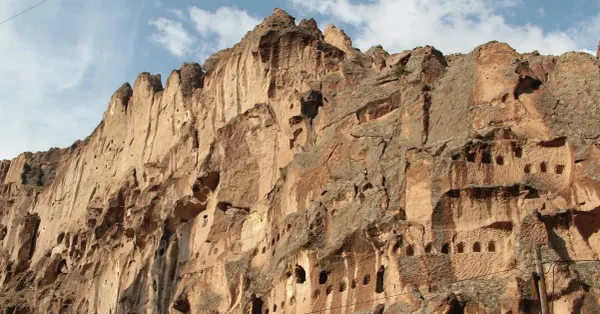
You'll admire towering rock formations, picturesque slopes, and countless small openings carved into the cliffs.
But there's something rather unusual about those openings.
Many of them weren't created for people.
They were created for pigeons!
And no, the ancient locals weren't running some kind of luxury pigeon hotel.
Although, considering the number of rooms available, they could have developed quite a successful business!
These small structures are known as dovecotes, or Güvercinlik in Turkish.
They played a surprisingly important role in the agricultural life of Cappadocia.
For generations, local farmers faced a difficult challenge.
How could they improve agricultural productivity in a region with challenging terrain and limited fertile soil?
The answer came from an unexpected source.
Pigeon droppings!
Yes.
We're talking about bird poop.
And before you close this page in disgust, allow us to explain why it was practically agricultural gold!
Pigeon manure contains nutrients that can help enrich soil.
For centuries, farmers in Cappadocia collected it and used it as natural fertilizer for vineyards, orchards, and agricultural fields.
In a region where agriculture required considerable effort, improving soil fertility could make an important difference.
So local people carved special shelters into the rock formations to encourage pigeons to nest.
The birds received protection and places to live.
The farmers received valuable fertilizer.
And everyone benefited.
One of history's most successful business partnerships!
The pigeons worked.
The farmers collected.
The vineyards flourished.
And nobody needed to sign an employment contract!
Here's another fascinating connection.
Cappadocia has a long history of grape cultivation and winemaking.
The region's vineyards have been part of local agricultural traditions for many centuries.
Pigeon manure was one of the natural fertilizers used to support grape production.
So, in a rather unexpected way, these birds contributed to the agricultural economy and wine culture of the region.
Next time you enjoy a glass of Cappadocian wine, perhaps raise a little toast to the pigeons!
We aren't suggesting you invite one to your dinner table.
But a little appreciation wouldn't hurt.
Many dovecotes were carefully designed to provide suitable nesting spaces.
Some were decorated with painted patterns and geometric designs.
The decorations could serve cultural or practical purposes, and their styles varied across the region.
These structures reveal something important about the people of Cappadocia.
They didn't simply adapt to their environment. They developed clever ways of working with it.
And that's one of the most beautiful characteristics of traditional Anatolian life.
From Pigeon Valley Panorama, you'll enjoy another magnificent view while discovering the relationship between pigeons, agriculture, and local communities.
Your guide will explain how the rock-cut dovecotes were used and why these seemingly ordinary birds were once so valuable.
And when you look across the valley, those tiny openings in the cliffs will suddenly mean much more.
They aren't just unusual architectural details.
They're reminders of the resourcefulness of generations who lived here.
Who would have thought that a valley full of pigeon houses could teach us so much about human survival?
And now that we've discovered how locals used the rocks to support agriculture, let's explore how they transform beautiful natural stone into art!
If there's one thing you've probably noticed by now, it's that Cappadocia has an extraordinary relationship with rocks.
People live inside them.
Build churches within them.
Carve underground cities beneath them.
And apparently, that still wasn't enough.
They decided to turn beautiful stones into decorative masterpieces as well!
Welcome to a traditional stone workshop!
Here, you'll discover another fascinating aspect of local craftsmanship: the shaping and polishing of ornamental stones.
One of the materials commonly associated with Cappadocian souvenir workshops is onyx, particularly the banded decorative stone often commercially described as onyx marble.
Now, here's an interesting geological detail.
The word onyx can refer to different materials in the decorative stone and jewelry trades.
True onyx is a variety of banded chalcedony, while much of the ornamental stone marketed as onyx marble is actually a form of banded calcite.
These beautiful stones can display striking layers of cream, brown, yellow, green, and other natural colors.
Their patterns develop through geological processes involving mineral deposition.
And because no two natural stones are exactly alike, every finished piece has its own distinctive appearance.
Nature produces the pattern. The craftsman brings out its beauty.
Quite a lovely partnership!
Before a beautiful piece of stone becomes a decorative object, it must pass through several stages of preparation.
First, the artisan selects suitable material.
Then the stone is cut and shaped according to the desired design.
Depending on its properties, it may be transformed into ornamental objects, small sculptures, or jewelry components.
The surface is gradually smoothed and polished, revealing the natural colors and patterns hidden within the material.
And this is where craftsmanship makes all the difference.
A skilled artisan must understand the stone's structure, recognize its natural features, and work carefully to avoid damaging the material.
After all, unlike a computer document, you can't always press Undo when you've cut too much stone!
One wrong move, and your beautiful decorative bowl might suddenly become a very expensive paperweight.
During the workshop visit, you'll discover how artisans transform natural stone into carefully finished decorative pieces.
Depending on the workshop, you may observe cutting, shaping, polishing, or examples of completed designs.
You'll also have the opportunity to admire the colors and distinctive patterns found within ornamental stones.
And perhaps you'll discover a beautiful souvenir to take home.
But even if you don't purchase anything, there's something valuable to learn.
A finished product shows you the result. Watching craftsmanship helps you appreciate the work behind it.
And that's exactly what we love about experiences like this!
Now, let's leave the world of gemstones behind and head toward a place where stone was transformed into something far more spiritual.
Our next destination is one of the fascinating historical treasures of southern Cappadocia.
Welcome to Keşlik Monastery!
Located near the village of Cemil, south of Ürgüp, this remarkable rock-cut complex offers an extraordinary glimpse into the religious and communal life of Byzantine-era Cappadocia.
And before we continue, we should clarify something.
When we say monastery, don't imagine a single little building where a few monks sat quietly reading books.
This place was practically an entire religious community carved into volcanic rock!
The complex includes churches, rooms for religious communities, kitchens, dining spaces, and other facilities used in everyday life.
In other words, these monks had quite a sophisticated setup.
And they managed it without modern construction equipment!
Christianity spread throughout Anatolia during the Roman period.
Over the following centuries, Cappadocia developed into an important region for Christian religious life, particularly during the Byzantine era.
The landscape offered unusual opportunities for creating places of worship and monastic retreat.
Soft volcanic rock could be carved into churches, chapels, chambers, and communal spaces.
And in more isolated locations, religious communities could establish environments suitable for prayer, contemplation, and disciplined living.
For many monks, simplicity and spiritual dedication were essential parts of their lifestyle.
Now imagine telling someone today:
"I'm leaving everything behind to live in a cave and dedicate myself to prayer."
Their first question would probably be:
"But does the cave have internet?"
Different times, different priorities!
Keşlik is particularly interesting because it preserves evidence of a functioning religious complex rather than merely an isolated church.
Among its notable spaces are the Church of the Archangel Michael and the Church of Saint Stephen.
The complex also contains a large dining hall, traditionally called a refectory, along with spaces associated with food preparation, storage, and communal activities.
Other features include a sacred spring and areas connected with agricultural production.
Some estimates suggest that the complex could accommodate a substantial monastic community.
Just imagine the organization required!
A community of monks needed food.
They needed water.
They needed places to sleep.
They needed spaces for worship.
And they needed ways of preparing and storing supplies.
Even the most spiritually dedicated people eventually get hungry!
Which brings us to an important point.
Monastic life wasn't only about prayer.
It also involved practical work and maintaining a functioning community.
One of the most fascinating aspects of Keşlik is its surviving religious artwork.
The churches contain traces of Byzantine wall paintings, commonly known as frescoes.
These works helped communicate religious stories and imagery through visual art.
The Church of the Archangel Michael is particularly known for its darkened interior paintings.
Over centuries, smoke from candles and other sources contributed to blackening portions of the decorated surfaces.
As a result, some of the original paintings can be difficult to recognize today.
Think about that for a moment.
Centuries of worship have literally left their traces on the walls.
The Church of Saint Stephen also preserves important examples of rock-cut architecture and decorative painting.
These spaces are powerful reminders that Cappadocia's caves were not merely places of shelter.
They were places where people expressed their faith, creativity, and understanding of the world.
One of Keşlik's most remarkable features is its large rock-cut dining hall.
The refectory contains features carved directly into the stone, including seating and dining arrangements.
Imagine preparing food for a religious community and gathering everyone around stone dining areas.
No luxury restaurant chairs.
No designer furniture.
No arguments about which table has the best view.
The tables were literally part of the mountain!
And this makes Keşlik especially fascinating.
It shows how the people of Cappadocia transformed the natural landscape into spaces suitable for virtually every aspect of daily life.
During your visit, you'll explore accessible sections of the monastery while your guide explains the site's religious and historical significance.
You'll discover how Christian communities organized their lives, how their buildings were carved into volcanic rock, and why this unusual environment was suitable for monastic traditions.
You may also observe surviving frescoes and architectural details that reveal the artistic heritage of Byzantine Cappadocia.
And we encourage you to take a moment to imagine the daily life of those who once lived here.
The prayers.
The shared meals.
The work.
The silence.
The extraordinary commitment required to maintain such a community.
Reading about monks teaches you what monastic life was. Standing inside their monastery helps you imagine what it felt like.
And that makes all the difference.
All right.
We've admired magnificent landscapes.
We've discovered how pigeons contributed to agriculture.
We've explored stone craftsmanship.
And we've traveled through centuries of Christian religious history.
But there's something we haven't discussed yet.
Your stomach!
And judging by the situation, it appears to be preparing a formal complaint.
Ladies and gentlemen, it's time for lunch!
After all, we cannot reasonably expect anyone to investigate ancient civilizations while surviving on nothing but historical facts.
Your lunch break offers a wonderful opportunity to relax, recharge, and discover the delicious flavors of Anatolian cuisine.
Depending on the restaurant and menu selected for your tour, you may enjoy a variety of traditional Turkish dishes prepared using familiar regional ingredients.
And believe us, Anatolian cuisine has quite a story of its own!
For centuries, local communities developed recipes based on seasonal produce, grains, legumes, meat, and the ingredients available in their environment.
Many traditional dishes reflect generations of practical knowledge, creativity, and family traditions.
The result?
One of the most wonderfully diverse culinary traditions you could hope to experience!
So take your time.
Enjoy your meal.
Perhaps finish with a cup of Turkish tea.
Because our next destination is something truly special.
A peaceful valley filled with ancient churches, beautiful landscapes, and remarkable traces of Byzantine civilization.
And after that?
We're going underground!
So enjoy the sunlight while you can.
Welcome to Soğanlı Valley!
Located in the Yeşilhisar district of Kayseri, this remarkable valley offers a quieter and more intimate experience of Cappadocia's extraordinary heritage.
While some parts of Cappadocia attract large numbers of visitors, Soğanlı has preserved a wonderfully peaceful atmosphere.
Here, the landscape feels almost untouched by the rush of modern life.
Rock formations rise from the valley slopes.
Ancient churches hide within the cliffs.
And traces of former communities remind visitors that this peaceful landscape was once home to generations of people.
But don't be fooled by the silence.
This valley has quite a lot to say!
The history of settlement in Soğanlı stretches back to the Roman period.
Some rock-cut spaces in the area were used as burial places, reflecting the traditions of ancient communities.
Later, during the Byzantine period, the valley developed into an important center of Christian religious life.
Churches, monastic spaces, and other structures were carved directly into the soft volcanic rock.
Over time, the valley became home to a remarkable collection of religious buildings.
The wider area contains approximately fifty historical churches and cave structures, although not all are accessible to visitors today.
And once again, we encounter that extraordinary Cappadocian habit.
Why build a church beside a mountain when you can carve one directly into it?
Apparently, ancient Cappadocians were determined to make ordinary construction look boring!
Among the valley's notable religious monuments are the Karabaş Church, Kubbeli Church, Tahtalı (Saint Barbara) Church, and Yılanlı Church.
Each offers a different perspective on the region's Byzantine religious heritage.
Some contain surviving frescoes depicting scenes from Christian traditions.
Others are especially interesting because of their architectural design.
For instance, Kubbeli Church, also known as the Domed Church, is particularly remarkable for its carved architectural features.
Instead of constructing every element with separate masonry, its builders worked directly with the existing volcanic formation.
The result is a striking example of the relationship between natural geology and human creativity.
Nature supplied the rock. The builders supplied the imagination.
And centuries later, we get to admire their work!
Now, here's something particularly fascinating.
Imagine living in a period when printed books were rare, literacy was far less widespread, and religious knowledge was often communicated through spoken teaching and visual art.
How could communities represent important religious stories?
Through paintings!
The frescoes found in Cappadocia's Byzantine churches depict subjects associated with Christianity, including figures of saints and scenes from the life of Jesus.
These paintings were more than decorations.
They played meaningful roles in the religious and cultural lives of the communities that created them.
And many have survived for hundreds of years.
Think about it.
An artist carefully painted a religious image on a cave wall centuries ago.
The world changed.
Empires rose and disappeared.
Generations came and went.
And parts of that artwork are still here.
That's one incredibly long-lasting art exhibition!
But Soğanlı isn't only about ancient churches.
It also has a wonderful living tradition.
The village is known for its colorful handmade Soğanlı dolls, traditionally produced by local women.
These decorative dolls are often dressed in clothing inspired by local Anatolian traditions.
What began as a local craft developed into one of the area's recognizable cultural products.
And here's what makes this particularly special.
Traditional craftsmanship can provide an important source of income while helping preserve elements of regional culture.
So these colorful little dolls are more than souvenirs.
They represent the creativity and skill of the women who make them.
And unlike some souvenirs that end up forgotten in a drawer, they carry a genuine connection to the people and traditions of the region.
During your visit to Soğanlı Valley, you'll explore the landscape and discover accessible examples of its remarkable rock-cut religious architecture.
Your guide will explain how the valley developed during the Byzantine period and help you understand the historical importance of its churches and surviving artwork.
You'll have the opportunity to appreciate both the natural scenery and the cultural heritage preserved within it.
Depending on the arrangements and available local workshops, you may also encounter examples of traditional Soğanlı craftsmanship.
But here's our favorite part.
Soğanlı doesn't simply invite you to look at history. It invites you to walk through it.
Every pathway, church entrance, and carved chamber offers a reminder that people once called this extraordinary place home.
And while the atmosphere may be peaceful today, the valley holds centuries of stories beneath its silence.
Now, are you ready for the grand finale?
Because our next destination takes Cappadocia's extraordinary relationship with rocks to a completely different level.
Actually...
Eight levels!
Now comes one of the most exciting parts of the Green Tour!
Ladies and gentlemen, welcome to Kaymaklı Underground City!
Before we continue, we should ask you something.
Have you ever considered building a basement beneath your house?
Perhaps a storage room?
A small wine cellar?
Maybe a cozy entertainment room?
Wonderful ideas!
But the ancient inhabitants of Cappadocia apparently thought those ambitions were far too modest.
They carved an entire underground city!
Not just one room.
Not just a basement.
Not even two underground floors.
An extensive settlement consisting of eight known levels, carved into the volcanic rock.
And here's the truly fascinating part.
They managed to create spaces for daily activities, food storage, religious worship, ventilation, and protection from external threats.
All without modern drilling machines, electrical lighting, or computerized architectural software.
Ancient engineering really knew how to show off!
The origins of Cappadocia's underground settlements are complex, and different periods of occupation and expansion have contributed to the structures visible today.
The earliest phases of Kaymaklı are often associated with ancient Anatolian civilizations, including the Hittite period.
Over subsequent centuries, its underground spaces were expanded and adapted.
During the Roman and Byzantine periods, underground settlements became especially valuable as places of refuge.
Christian communities used such spaces during periods of insecurity and conflict.
But here's an important distinction.
These underground cities were not necessarily intended to replace ordinary life above the surface permanently.
They could provide places where communities took shelter when danger threatened.
And when you see how carefully some of these spaces were organized, you'll understand why.
Imagine living in a period when military raids, conflicts, and political instability could threaten local settlements.
You hear that danger is approaching.
What do you do?
Pack your belongings?
Run toward the mountains?
Hope nobody notices your village?
The inhabitants of Cappadocia developed another remarkable solution.
Disappear underground!
The soft volcanic rock made it possible to create extensive networks of connected chambers and passages.
These spaces offered protection and helped communities remain concealed during dangerous periods.
And once the entrances were secured, reaching the inhabitants could become extremely difficult.
Not a bad defensive strategy!
Of course, life underground required careful planning.
People needed air.
They needed water.
They needed places to store food.
And they needed spaces suitable for sheltering both themselves and their animals.
Which is exactly why Kaymaklı is so impressive.
Kaymaklı contains eight known underground levels, although four are currently illuminated and accessible to visitors.
The underground spaces are connected by a network of narrow corridors, rooms, and passages.
Different areas served different practical purposes.
Among the remarkable features are stables, kitchens, food-storage spaces, water facilities, a church, and rooms associated with wine production and storage.
And perhaps most importantly, ventilation shafts helped fresh air circulate through the underground settlement.
Think about the planning required.
The ancient inhabitants weren't simply digging random holes beneath their houses.
They were creating interconnected spaces that could support a community during periods of refuge.
While modern people sometimes struggle to assemble a wardrobe using an instruction manual, these communities were organizing life inside a mountain!
Quite humbling, isn't it?
One of the important features of Kaymaklı is its stable area.
Animals were valuable to historical communities for transportation, agriculture, and food production.
Leaving them exposed during periods of danger could have serious consequences.
So the underground settlement included spaces where animals could be sheltered.
Now imagine walking into your underground home after a difficult day.
You hear footsteps in the corridor.
Perhaps some voices.
And somewhere nearby...
A donkey!
Not exactly the peaceful basement experience you had in mind!
But for ancient communities, keeping their animals safe was an essential part of survival.
Now let's discuss something very important.
Food!
Because building an underground shelter is impressive.
But staying inside without anything to eat?
That's a rather terrible plan.
Kaymaklı contains spaces associated with food preparation and storage.
The region's agricultural traditions provided products that could be preserved and stored for future use.
Grains, dried foods, and other suitable supplies were essential resources for communities facing periods of uncertainty.
Wine-production and storage areas also reflect the historical importance of grape cultivation in Cappadocia.
And the fact that such facilities existed underground demonstrates how carefully these spaces were adapted to practical needs.
Survival requires strategy. And strategy apparently includes knowing where to keep your snacks!
Now comes one of the most impressive engineering features.
The ventilation shafts!
Imagine creating an underground complex with multiple levels and interconnected rooms.
There's just one rather important issue.
People need to breathe.
And fresh air isn't going to magically appear because you've asked nicely.
The builders of Kaymaklı incorporated ventilation shafts into the underground design.
These openings allowed air to circulate through different parts of the settlement.
The shafts were essential to making the underground spaces usable.
And the fact that these features were designed and maintained long before modern mechanical ventilation makes them especially impressive.
Ancient people really did understand that good architecture starts with keeping everyone alive!
A surprisingly sensible design philosophy.
Now, here's where things get seriously exciting.
Among Kaymaklı's most remarkable defensive features are large circular stone doors.
These heavy stones could be positioned to block passages, helping protect the people sheltering inside.
Imagine someone attempting to enter a narrow corridor.
They move forward.
They expect to find a passage.
And suddenly...
A giant stone door blocks their way!
No electronic lock.
No security camera.
No alarm system.
Just an enormous piece of rock.
The design could allow defenders to close important passages from within the underground settlement.
And because many corridors were narrow, gaining access could be extremely difficult.
Think about that the next time your phone asks you to create a password with twelve characters, three symbols, and the name of your first pet!
These people simply rolled a giant stone across the entrance.
Problem solved!
Kaymaklı also contains a rock-cut church.
The presence of this religious space reflects the importance of Christianity to communities that used the underground settlement during the Roman and Byzantine periods.
For people seeking refuge, maintaining religious practices could provide comfort, identity, and a sense of continuity.
And this makes the underground city much more than a defensive structure.
It was a place where people attempted to preserve important parts of their everyday lives, even under difficult circumstances.
Food.
Shelter.
Community.
Faith.
Security.
All within a remarkable network of underground spaces.
Now comes the moment we've been waiting for.
You're going underground!
During your visit, you'll enter the accessible sections of Kaymaklı and explore its extraordinary network of carved passages and chambers.
Your guide will explain how different spaces were used and how the underground settlement developed over time.
You'll discover the ingenuity behind its ventilation systems, defensive stone doors, and practical arrangements for daily life.
But here's something particularly memorable.
Some of the passages are narrow and low.
You may need to bend down while moving between sections.
And yes, taller visitors might find themselves developing a sudden appreciation for shorter people!
The ancient builders clearly weren't designing these tunnels for professional basketball players!
But that's part of what makes the experience so extraordinary.
You're not simply looking at an ancient building from a distance.
You're moving through spaces carved and used by people many centuries ago.
You'll see the chambers.
You'll feel the enclosed environment.
You'll notice how carefully different areas were connected.
And you'll begin to understand the extraordinary challenges involved in creating and using such a settlement.
Visitors who are uncomfortable in confined spaces should be aware that some sections involve low ceilings and narrow passages.
But for those comfortable exploring them, Kaymaklı offers a remarkable journey beneath Cappadocia's surface.
Now imagine living through a period of danger.
You and your community enter the underground settlement.
The entrances are secured.
You move through narrow corridors toward the chambers where your family is sheltering.
Your everyday life above ground has temporarily been replaced by a world of carved stone and limited natural light.
And yet, through planning and cooperation, your community has created a place of refuge.
Suddenly, Kaymaklı becomes more than an impressive archaeological site.
It becomes a story of human ingenuity, adaptation, and the determination to survive.
You can read about underground cities in books.
You can watch documentaries about their construction.
You can even study architectural drawings explaining their design.
But until you walk through those narrow corridors yourself, there's something you simply cannot fully understand.
What it feels like to be there.
And that, dear traveler, is precisely why experiences matter!
After exploring magnificent valleys, ancient monasteries, beautiful stone workshops, and one of Cappadocia's extraordinary underground cities, we have one final surprise.
And
2 guided tours include a stop at Cappadocia Green Tour | Underground City & Scenic Valleys.
Browse all Cappadocia attractions