Cappadocia Adventures
Cappadocia Adventures

Cappadocia is a destination where history, religion, philosophy and extraordinary natural landscapes come together. Beyond its famous fairy chimneys, ancient cave churches and underground cities, the region also offers visitors an opportunity to discover one of Anatolia's most profound spiritual traditions: the Whirling Dervish Ceremony.
Known as Sema, this centuries-old ceremony is deeply connected with the teachings of Mevlana Celaleddin Rumi and the Mevlevi Sufi tradition.
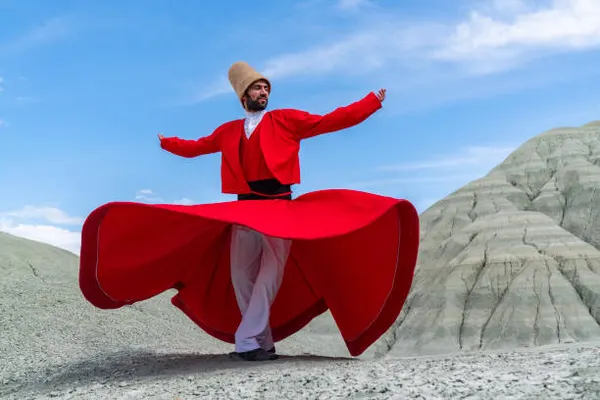
Imagine entering a historic Seljuk caravanserai, surrounded by centuries-old stone walls. The gentle sound of the ney begins filling the room, and white-robed dervishes gradually extend their arms and begin to whirl.
Every movement, garment and musical composition carries a deeper spiritual meaning.
Unlike conventional entertainment, the Whirling Dervish Ceremony invites visitors to experience an atmosphere of contemplation, humility and spiritual devotion.
With Cappadocia Adventures, discover the philosophical and spiritual side of Anatolian culture through one of Türkiye's most remarkable living traditions.
Before discovering the meaning of the ceremony, it is important to understand what a dervish actually is.
The word dervish refers to a follower of a Sufi spiritual path within Islam, traditionally associated with simplicity, humility, devotion and the pursuit of spiritual understanding.
Sufism, known as Tasavvuf in Turkish, emphasises spiritual development, self-discipline and a deeper relationship with God.
For the Mevlevi tradition, this spiritual journey is expressed through religious devotion, music, poetry, contemplation and the symbolic movements of Sema.
The individuals who perform the whirling ceremony are known as Semazen.
Their movements are not intended simply to entertain an audience. They represent a spiritual practice connected with overcoming the ego, expressing divine love and developing humility.
Understanding this distinction allows visitors to appreciate the ceremony beyond its visually remarkable appearance.
Mevlana Celaleddin Rumi, internationally known as Rumi, was one of the most influential Islamic scholars, mystics and poets of the medieval world.
Born in 1207, Rumi spent much of his life in Konya, which was an important cultural and intellectual centre during the Seljuk period.
His teachings emphasised divine love, compassion, humility, spiritual transformation and humanity's relationship with God.
Among his most celebrated literary works is the Masnavi, an extensive collection of spiritual poetry and philosophical teachings.
Rumi's influence extended beyond his lifetime, inspiring generations of scholars, poets, musicians and spiritual followers.
Following his death in 1273, his followers developed the Mevlevi Order, preserving and formalising the spiritual practices associated with his teachings.
Today, the Whirling Dervish Ceremony remains one of the most internationally recognised expressions of Mevlevi culture.
Although Konya remains the city most closely associated with Rumi, Cappadocia offers visitors another remarkable setting in which to witness this spiritual tradition.
Sema is a traditional Sufi ceremony involving music, religious recitation, carefully structured movements and symbolic whirling.
Within the Mevlevi tradition, the ceremony represents a spiritual journey towards divine love, knowledge and the overcoming of the ego.
The graceful movements of the dervishes express a process of spiritual transformation rather than an ordinary dance.
Traditional musical compositions accompany the ceremony, creating an atmosphere of contemplation and devotion.
The carefully structured nature of Sema reflects centuries of Mevlevi religious and artistic traditions.
Almost every element of the ceremony carries symbolic significance, from the garments worn by the dervishes to the position of their hands while whirling.
Understanding these symbols can transform the way visitors experience the ceremony.
Perhaps the most frequently asked question about the Whirling Dervish Ceremony is why the dervishes continuously turn.
Within Mevlevi philosophy, whirling represents a spiritual journey in which the individual seeks to move beyond selfishness, pride and worldly attachments.
The circular movement is also traditionally associated with the harmony and continuous movement of creation.
The dervishes turn with carefully controlled movements, requiring physical balance, concentration and spiritual discipline.
The purpose is not to demonstrate speed or physical endurance. Instead, the movement expresses devotion and the pursuit of spiritual understanding.
What may initially appear to be a simple circular movement carries a profound philosophical and religious meaning.
The traditional clothing worn by the semazens is an essential part of the symbolism of Sema.
Each garment represents a different aspect of the individual's spiritual journey.
The distinctive tall felt hat worn by the dervishes is known as the Sikke.
It traditionally symbolises the tombstone of the ego, representing the spiritual effort to overcome pride, selfishness and worldly desires.
Its simple appearance reflects the importance of humility within the Mevlevi tradition.
The flowing white garment worn during the ceremony is called the Tennure.
It represents the symbolic shroud of the ego, expressing the idea of spiritual renewal through overcoming worldly attachments.
As the dervishes begin to whirl, the white garments gradually open, creating one of the most recognisable images of Mevlevi culture.
Although visually beautiful, the garment's importance extends far beyond its appearance.
At the beginning of the traditional ceremony, the dervishes wear a dark outer cloak known as the Hırka.
The cloak is associated with the grave and the individual's worldly existence.
Removing it before whirling symbolises leaving worldly attachments behind and beginning the spiritual journey.
Together, the Sikke, Tennure and Hırka express the symbolic transformation at the heart of the ceremony.
One of the most beautiful and meaningful elements of the Whirling Dervish Ceremony is the position of the semazens' hands.
As the dervishes whirl, their right hands traditionally face upward towards the heavens, while their left hands face downward towards the earth.
The upward-facing hand symbolises receiving divine grace from God.
The downward-facing hand represents sharing that grace with creation.
The dervish does not seek to possess divine blessings exclusively but to become a means through which they can reach others.
This gesture reflects the importance of humility, generosity and selflessness within Mevlevi philosophy.
What initially appears to be an elegant physical movement is, in fact, one of the ceremony's most profound spiritual symbols.
The traditional Mevlevi Sema Ceremony contains four principal whirling sections known as Selam, meaning salutation.
Each represents a different stage of spiritual development.
The first stage represents humanity's recognition of its existence as part of creation and its relationship with God.
The second stage expresses admiration and spiritual wonder in response to divine greatness.
The third stage represents the transformation of spiritual wonder into divine love and surrender.
The final stage represents the individual's return to everyday life with a renewed understanding of humility and service.
Together, these stages express a spiritual journey that does not end with personal enlightenment but continues through one's relationship with the surrounding world.
The structure of individual visitor-oriented ceremonies may vary depending on the venue and programme.
Music is not simply background entertainment during Sema. It is an essential part of the Mevlevi spiritual tradition.
Traditional compositions, devotional recitations and musical instruments accompany the movements of the dervishes.
One of the most significant instruments is the Ney, a traditional reed flute closely associated with Sufi music.
Its distinctive sound is traditionally interpreted as an expression of spiritual longing.
Other instruments, including traditional percussion and string instruments, may accompany the ceremony according to its musical arrangement.
The combination of music, silence and movement creates a deeply contemplative atmosphere.
Visitors do not need to understand the language of the religious recitations to appreciate the ceremony's artistic and spiritual character.
Cappadocia's historical identity is shaped by centuries of religious, cultural and architectural traditions.
The region is internationally recognised for its Byzantine Christian heritage, rock-carved religious monuments and extraordinary historical settlements.
However, its cultural identity also reflects the Islamic and Seljuk heritage of Anatolia.
During the Seljuk period, Cappadocia formed part of a wider network of settlements and commercial routes connecting different regions of Anatolia.
Historical caravanserais, stone buildings and surviving architectural monuments reflect this important chapter of the region's history.
Today, witnessing a Whirling Dervish Ceremony inside a historic Cappadocian stone venue provides an opportunity to discover another dimension of this cultural heritage.
Although the Mevlevi tradition developed most prominently around Konya, visitors to Cappadocia can experience its spiritual symbolism without travelling to another destination.
This combination of historical architecture, traditional Sufi music and Mevlevi philosophy makes Cappadocia a particularly atmospheric place to witness Sema.
One of the most remarkable elements of the Cappadocia Whirling Dervish experience is its historical setting.
Caravanserais were roadside establishments built to accommodate merchants, travellers and trading caravans moving along important commercial routes.
During the Seljuk period, these structures became an essential part of Anatolia's transportation and commercial network.
Their distinctive stone walls, monumental entrances, vaulted interiors and courtyards reflect the architectural traditions of medieval Anatolia.
Today, historical venues provide an extraordinary setting for experiencing the Whirling Dervish Ceremony.
One notable example is Saruhan Caravanserai, also known as Sarıhan, a 13th-century Seljuk monument dating to 1249, located near Avanos.
As the sound of traditional Sufi music fills the historic stone interior, the architectural atmosphere complements the solemn character of the ceremony.
Unlike conventional performance halls, these historical surroundings connect visitors with the wider cultural heritage of medieval Anatolia.
The venue is more than a place to observe the ceremony. It becomes part of the experience itself.
The exact caravanserai or ceremony venue will be confirmed according to your reservation.
Yes. The Mevlevi Sema Ceremony was proclaimed a masterpiece of intangible cultural heritage by UNESCO in 2005.
In 2008, it was inscribed on UNESCO's Representative List of the Intangible Cultural Heritage of Humanity on behalf of Türkiye.
This international recognition acknowledges the cultural, spiritual, artistic and historical significance of the Mevlevi tradition.
Unlike monuments or archaeological sites, intangible cultural heritage includes living traditions, knowledge, skills, music and practices transmitted between generations.
The recognition of Sema highlights the importance of preserving its spiritual meaning, traditional music, symbolic movements and cultural identity.
It is important to understand that UNESCO recognises the Mevlevi Sema tradition itself, rather than certifying every individual ceremony or tourism venue.
Your experience takes place inside a historical stone venue, where you will be seated before the ceremony begins.
The atmosphere is peaceful and contemplative, allowing guests to concentrate on the traditional music, religious symbolism and movements of the dervishes.
As the ceremony progresses, the semazens begin their carefully structured movements, gradually entering the whirling sections associated with the Mevlevi tradition.
Throughout the experience, visitors are encouraged to remain quiet and respectful.
Our standard Whirling Dervish experience lasts approximately 45 minutes, although the precise duration may vary according to the ceremony programme and venue.
Traditional Şerbet, a ceremonial beverage, is included in our published experience.
Hotel pickup and drop-off are available depending on the selected reservation option.
Although both experiences are associated with Turkish culture, they offer entirely different atmospheres.
The Turkish Night Show focuses on regional folk dances, traditional entertainment, belly dancing, music and optional dinner arrangements.
The Whirling Dervish Ceremony, however, is rooted in Islamic mysticism and Mevlevi spiritual traditions.
There is no expectation of audience participation, dancing or celebration during Sema.
Instead, visitors are invited to observe the ceremony quietly and appreciate its philosophical and religious meaning.
Travellers looking for an energetic evening of entertainment may prefer Turkish Night.
Those interested in religion, philosophy, spirituality and the historical traditions of Anatolia will find the Whirling Dervish Ceremony particularly meaningful.
Both experiences introduce visitors to different aspects of Türkiye's extraordinary cultural heritage.
The Mevlevi Sema Ceremony carries deep religious and spiritual significance. Visitors are therefore encouraged to approach the experience respectfully.
To preserve the atmosphere of the ceremony:
Wear modest and comfortable clothing.
Remain quiet throughout the ceremony.
Keep mobile phones on silent.
Avoid disruptive behaviour.
Follow the venue's photography and video restrictions.
Do not use flash photography.
Do not bring outside food or beverages into the ceremony area.
Unlike ordinary entertainment, audience participation and applause should follow the instructions of the organisers.
The purpose is to respect both the performers and the spiritual character of the tradition.
The Whirling Dervish Ceremony, known as Sema, is a Mevlevi Sufi spiritual practice involving symbolic movements, traditional music and religious devotion.
Whirling Dervish ceremonies take place in selected historical buildings and traditional stone venues, including historic Seljuk caravanserais in the region.
Yes. Sema is rooted in the Islamic Sufi tradition and carries deep spiritual and religious significance.
No. Visitors from different religious and cultural backgrounds can respectfully observe the ceremony.
Whirling represents a spiritual journey associated with divine love, overcoming the ego and developing spiritual understanding.
The traditional white garment, known as Tennure, symbolises the shroud of the ego and the process of spiritual renewal.
Our standard published experience lasts approximately 45 minutes. The exact duration may vary depending on the venue and ceremony programme.
Photography and video policies vary according to the venue. Some venues prohibit recording during the ceremony entirely. Always follow the organisers' instructions.
Our standard published experience is not suitable for children under seven years old. Older children should be able to remain quiet and respectful throughout the ceremony.
Hotel pickup and drop-off are available when the appropriate reservation option is selected.
No. The standard experience does not include dinner. Traditional Şerbet is included.
Yes. Ceremonies take place inside historical stone venues, making them a suitable cultural activity during colder months, subject to availability.
For visitors interested in Anatolian history, Islamic mysticism, traditional Sufi music and spiritual philosophy, the ceremony offers a meaningful cultural experience.
Contact Cappadocia Adventures for current prices, ceremony schedules, transportation options and reservation arrangements.
Activity: Traditional Mevlevi Whirling Dervish Ceremony (Sema).
Standard Duration: Approximately 45 minutes.
Venue: Historical Seljuk caravanserai or confirmed traditional stone venue.
Recommended Time: Evening.
Cultural Recognition: UNESCO Intangible Cultural Heritage.
Experience Highlights:
Traditional Mevlevi Sema Ceremony
Whirling Dervishes (Semazens)
Traditional Sufi Music
Symbolism of Mevlevi Philosophy
Historical Stone Architecture
Traditional Şerbet
Transportation: Hotel pickup and drop-off, depending on the selected option.
Dinner: Not included.
Minimum Age: Seven years old for our standard experience.
Seasonal Suitability: Suitable for summer and winter visits, subject to availability.
Important: Visitors must remain quiet and respectful throughout the ceremony. Photography policies, schedules and venue arrangements may vary.
Cappadocia is a destination where extraordinary landscapes meet thousands of years of cultural and religious history.
Its fairy chimneys reveal the remarkable power of nature. Its ancient churches introduce visitors to centuries of Christian heritage. Its historical caravanserais preserve memories of medieval Anatolia.
And through the Whirling Dervish Ceremony, visitors can discover another dimension of this extraordinary region: its spiritual and philosophical heritage.
The teachings of Rumi remind us of the importance of humility, compassion and divine love.
The music invites contemplation.
The movements express devotion.
And the historical surroundings provide an atmosphere in which these traditions can be appreciated.
With Cappadocia Adventures, discover the profound meaning behind the Mevlevi Sema Ceremony and experience Cappadocia beyond ordinary sightseeing.
Because sometimes, the most extraordinary journeys are not about discovering a new place.
They are about discovering a different way of seeing the world.
1 guided tour includes a stop at Cappadocia Whirling Dervish Ceremony | Traditional Sema.
Browse all Cappadocia attractions