Cappadocia Adventures
Cappadocia Adventures

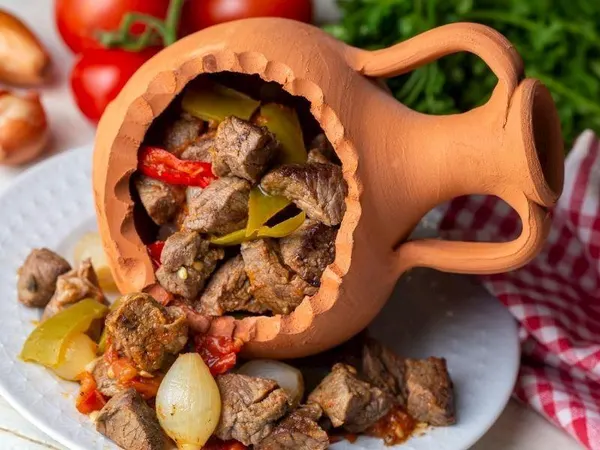
Pottery Kebab, known locally as Testi Kebabı, is more than just a delicious meal. It is a combination of history, tradition, and the unique culinary heritage of Cappadocia.
The region's pottery-making tradition dates back to the Hittite era. Avanos, a charming town in Cappadocia, has been famous for its red clay and pottery craftsmanship for thousands of years. This tradition also plays an important role in the local cuisine.
Pottery Kebab can be prepared with lamb, beef, or chicken, combined with fresh vegetables such as tomatoes, onions, garlic, and peppers.
Main Ingredients
The main ingredients of Testi Kebabı include:
Lamb, beef, or chicken
Tomatoes
Green peppers
Onions
Garlic
Tomato paste
Butter or vegetable oil
Salt
Black pepper
Red pepper flakes
Thyme
To answer that question, we need to travel thousands of years back in history.
The earliest known examples of fired-clay art date back approximately to 29,000–25,000 BCE. Long before modern cookware existed, humans had already discovered that something as simple as soil, water, and fire could become a durable material.
But why did pottery become so important in Cappadocia?
The answer flows right through the region: the Red River (Kızılırmak).
Stretching across Central Anatolia, Kızılırmak is the longest river flowing entirely within Türkiye. Its reddish sediments and the region's rich clay deposits provided generations of craftsmen with an abundant source of pottery material.
The tradition developed through several civilizations:
Hattians (c. 2500–2000 BCE): Indigenous Anatolian communities whose artistic and craft traditions flourished in Central Anatolia before the rise of the Hittite Kingdom.
Assyrian Trading Colonies (c. 1945–1730 BCE): Merchants from Mesopotamia established commercial networks around Kültepe/Kanesh, near present-day Kayseri, bringing writing systems, trading practices, and cultural influences.
Hittites (c. 1650–1200 BCE): One of the most influential civilizations of Bronze Age Anatolia, whose ceramic traditions became an important part of the region's archaeological heritage.
Pottery continued through the Roman, Byzantine, Seljuk, and Ottoman periods, with each era contributing to Anatolia's long history of craftsmanship.
And one place still carries this heritage today: Avanos, historically known as Venessa, where craftsmen continue to shape the famous red clay of Cappadocia.
But pottery was never just about art.
Unlike precious metals, clay was relatively accessible. With suitable soil, water, skilled hands, and a firing process, communities could create durable vessels for storing, preparing, and cooking food.
So, what makes clay pots special for cooking?
One of their greatest advantages is their ability to retain heat and release it gradually. This makes them particularly suitable
for slow-cooked dishes, allowing meat, grains, and vegetables to become tender while their flavors develop together.
When used with a lid, clay pots also help retain steam and moisture, allowing ingredients to cook in their own juices. This can reduce the need for additional cooking oil and produce beautifully tender meals.
Another advantage is their suitability for traditional slow cooking. Instead of relying on intense heat and constant attention, food can simmer gently as the ingredients gradually release their aromas and flavors.
When Did Pottery Kebab Become a Part of the Culture?
Actually, people weren't consuming Pottery Kebab the way it is served today. The modern presentation of Pottery Kebab includes a little bit of a show, where the server brings the pot to your table and cracks it open in the middle. Without a doubt, that adds to the fun!
Historically, as mentioned above, pottery has always remained an important cooking vessel in Cappadocia.
Traditionally, Pottery Kebab was prepared in larger pots than those shown in the photos below. We mainly call this type of cooking vessel Güveç, a word that comes from the Old Turkic word küdeç, meaning a baked clay container.
To introduce our traditional flavors to visitors exploring the region, locals began using the English name "Pottery Kebab."
The pots also began to be produced in smaller, individual portions, making them more practical for serving and, of course, for the show!
Cooking Method
To prepare Pottery Kebab, after filling the pot with the ingredients, the first step is to cover the top with a piece of dough specifically made for this purpose. This prevents the flavors and moisture of the ingredients from escaping during cooking.
After completing the final preparations, the pots are placed in a Tandır (traditional Anatolian oven), at temperatures ranging from 160°C to 180°C, and cooked for approximately two and a half hours.
And now, the meal is ready to be served on your plate after the famous pot-cracking show!
Enjoy!
No tours currently list Tasting The Pottery Kebab! as a stop. Browse all day tours or plan a custom trip.
Browse all Cappadocia attractions