Cappadocia Adventures
Cappadocia Adventures

Cappadocia is not only a land of fairy chimneys and extraordinary landscapes but also one of the most remarkable centres of Christian heritage in Anatolia. Its valleys, volcanic cliffs and historical settlements preserve centuries of religious history through rock-cut churches, chapels and monasteries.
Christianity became established in Cappadocia during the early centuries AD. By the 4th century, the region had become an important centre of Christian theology and monastic life, influenced by the Cappadocian Fathers: Saint Basil the Great, Saint Gregory of Nazianzus and Saint Gregory of Nyssa.
The majority of Cappadocia's historic churches belong to the Eastern Christian and Byzantine religious traditions, while later churches reflect the heritage of Greek Orthodox communities living under Ottoman rule.
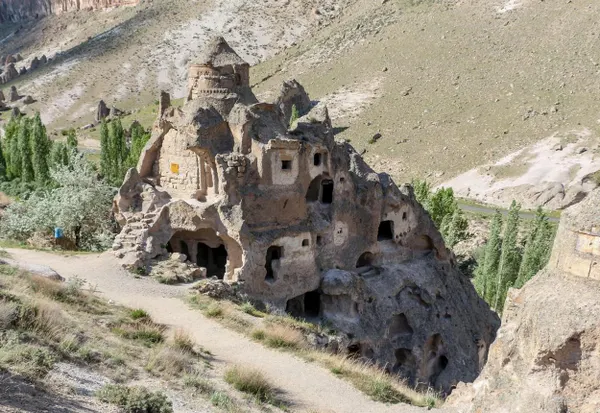
What makes Cappadocia's churches particularly distinctive is their architecture. Many were carved directly into soft volcanic rock, creating sanctuaries, apses, domes, burial chambers and extensive monastic complexes.
Their interiors were decorated with Byzantine frescoes depicting the life of Jesus Christ, the Virgin Mary, Christian saints, archangels and biblical events. These paintings served both religious and educational purposes.
Although rock-cut churches dominate the region, Cappadocia also contains remarkable masonry churches constructed from local stone.
Christian monastic activity in Cappadocia dates back to approximately the 4th century. Many surviving Byzantine churches and their frescoes date from the 9th to the 13th centuries, with particularly important examples from the 10th to the 12th centuries.
Christian religious life continued under Seljuk and Ottoman rule. New churches were also constructed during the 18th and 19th centuries, particularly in settlements such as Mustafapaşa and Güzelyurt.
Following the compulsory population exchange between Türkiye and Greece, agreed in 1923, many remaining Greek Orthodox communities left Cappadocia.
Numerous churches were abandoned, while others were converted into mosques, storage spaces or agricultural buildings. Natural erosion, rock collapses and environmental conditions also damaged many historical monuments.
Today, several churches are protected archaeological sites and museums. Göreme National Park and the Rock Sites of Cappadocia have been recognised as a UNESCO World Heritage Site since 1985.
From the extraordinary frescoes of the Dark Church and Tokalı Church in Göreme to the hidden monasteries of Ihlara Valley, the ancient churches of Soğanlı and the Greek Orthodox heritage of Mustafapaşa, every monument tells a different story.
Explore our comprehensive collection of Cappadocia's churches, chapels and monasteries to discover their individual histories, architectural features, biblical paintings, religious significance and surviving treasures.
Discover the churches of Cappadocia below and uncover the stories carved into its ancient volcanic landscape by the churhces blogs written in our website.
Sources & References
The historical, architectural and religious information presented in our Cappadocia church collection is informed by cultural heritage documentation, archaeological research and academic studies.
UNESCO World Heritage Centre – Göreme National Park and the Rock Sites of Cappadocia.
Republic of Türkiye, Ministry of Culture and Tourism – Cultural Heritage and Archaeological Documentation.
Turkish National Commission for UNESCO – Cappadocia World Heritage Documentation.
Hacettepe University – Studies on Byzantine Art and Christian Religious Architecture.
Boğaziçi University – Research on Orthodox Christian Communities in Ottoman Cappadocia.
Republic of Türkiye, Ministry of Foreign Affairs – Convention Concerning the Exchange of Greek and Turkish Populations (1923).
Jolivet-Lévy, Catherine (1991). Les églises byzantines de Cappadoce.
Rodley, Lyn (1985). Cave Monasteries of Byzantine Cappadocia.
Restle, Marcell (1967). Byzantine Wall Painting in Asia Minor.
Epstein, Ann Wharton (1986). Tokalı Kilise: Tenth-Century Metropolitan Art in Byzantine Cappadocia.
Ousterhout, Robert G. (2017). Visualizing Community: Art, Material Culture, and Settlement in Byzantine Cappadocia.
Cappadocia Adventures is committed to presenting historically accurate and informative content while promoting awareness and appreciation of Cappadocia's extraordinary Christian, Byzantine and architectural heritage.
Keywords:
Churches of Cappadocia
Cappadocia cave churches
Byzantine churches, Christian heritage in Cappadocia, Cappadocia monasteries, ancient churches in Türkiye
No tours currently list Churches of Cappadocia – History, Byzantine Heritage & Ancient Cave Churches as a stop. Browse all day tours or plan a custom trip.
Browse all Cappadocia attractions