Cappadocia Adventures
Cappadocia Adventures

Origins and Monastic Life
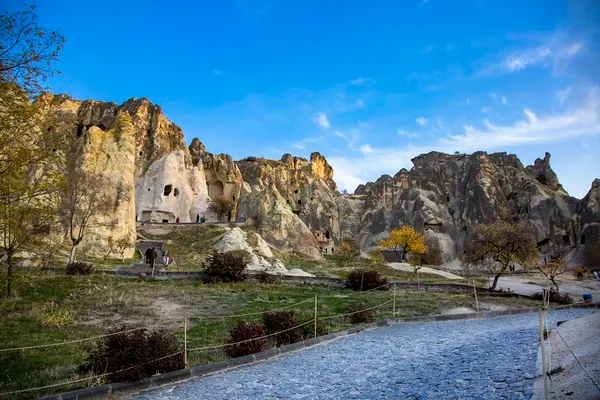
Emerging from 4th-century ascetic communities inspired by Basil of Caesarea, Göreme became a center of early Christian monasticism. Monks carved dwellings, refectories, and worship spaces directly into the soft tuff cliffs. By the Middle Byzantine era, the valley held hundreds of sanctuaries decorated with frescoes narrating biblical and saintly themes, embodying both devotion and isolation.
Architectural and Artistic Highlights
The museum’s best-known churches include Tokalı (Kilise), the largest and oldest, with vivid Christological cycles; Karanlık (Dark) Church, whose near-lightless interior preserved jewel-toned frescoes of the Nativity and Crucifixion; Elmalı (Apple) Church with domed architecture; St Barbara Chapel, painted in red-ochre geometric motifs; and Yılanlı (Snake) Church, featuring saints combating serpents or dragons. Collectively, these chapels illustrate the transition from austere iconoclastic symbolism to richly narrative Byzantine art after the 9th century.
Cultural Significance
Göreme Open-Air Museum is both a sacred landscape and an artistic archive. Its frescoes—depicting scenes from the Gospels and lives of Cappadocian Fathers—embody the fusion of Constantinopolitan influence with regional monastic creativity. The complex continues to attract scholars, pilgrims, and travelers seeking insight into Anatolia’s early Christian heritage and the enduring human impulse to carve faith into stone.
Visiting Information
Located about 1 km from Göreme village, the site is open roughly 8 AM–5 PM. A standard entry costs ≈ €20, with an extra €6–13 fee for the Dark Church. Photography inside the chapels is prohibited to protect pigments. Spring and autumn offer the most comfortable weather and smaller crowds.
Key facts
Location: Near Göreme, Nevşehir Province, Türkiye
UNESCO designation: 1985 (Cultural & Natural heritage)
Peak period: 10th–13th centuries CE
Highlight site: Karanlık Kilise (Dark Church)
2 guided tours include a stop at Göreme Open-Air Museum.
Browse all Cappadocia attractions