Cappadocia Adventures
Cappadocia Adventures

Historical background
Kaymaklı was likely first excavated by the Hittites or Phrygians, later expanded by early Christians seeking refuge from Roman and Arab persecution. Over centuries, residents enlarged and adapted the tunnels, creating a self-sustaining underground settlement with living quarters, stables, and worship areas. Its use continued intermittently through Byzantine and Seljuk times.
Architecture and layout
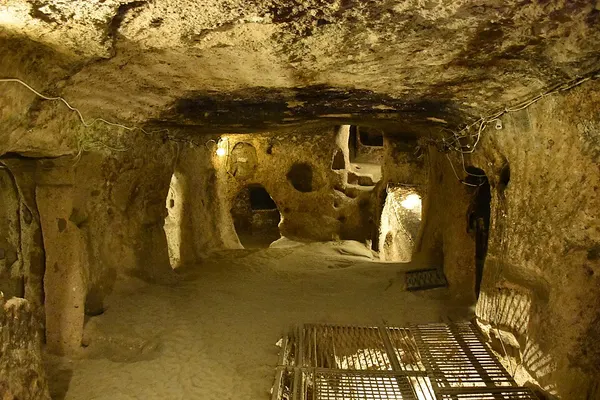
The city’s multi-level design demonstrates advanced engineering. Narrow tunnels connect chambers on eight known floors, featuring ventilation shafts, rolling stone doors for defense, and channels for water and waste. Communal spaces such as kitchens and wine presses indicate long-term habitation. Only four levels are currently open to the public for preservation and safety.
Cultural and touristic significance
As part of the broader network of Cappadocian underground cities—including Derinkuyu Underground City—Kaymaklı provides insight into ancient strategies for communal survival in hostile environments. It is a major highlight on tours of Göreme and Nevşehir, offering a tangible link between prehistoric ingenuity and early Christian heritage.
Preservation and research
Ongoing archaeological studies focus on mapping deeper levels and understanding how the settlement supported large populations. Preservation efforts balance visitor access with conservation, ensuring the integrity of this remarkable subterranean landscape remains intact.
Key facts
Location: Kaymaklı, Nevşehir Province, Turkey
Estimated origin: Hittite period (c. 1200 BCE)
Levels open to visitors: 4 of 8 discovered
Depth: Approx. 20 m (66 ft)
UNESCO status: Part of Göreme National Park and the Rock Sites of Cappadocia (since 1985)
1 guided tour includes a stop at Kaymaklı Underground City.
Browse all Cappadocia attractions