Cappadocia Adventures
Cappadocia Adventures

Think you've already tasted every possible bean dish? Cappadocia might surprise you!
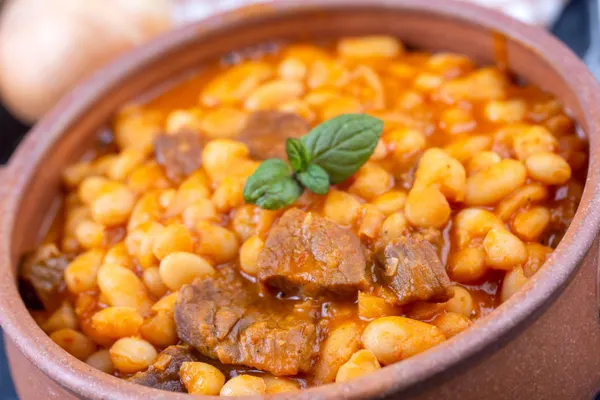
Ağpakla is a traditional specialty of the Nevşehir region, prepared with white beans, tender meat, onions, and rich seasonings.
The secret lies in its cooking method. The ingredients are combined in a clay pot and traditionally cooked slowly in a tandır oven.
As the dish cooks, the beans absorb the rich flavors of the meat and seasonings, creating a hearty and satisfying meal.
A simple yet delicious example of Cappadocia's traditional home cooking!
Ingredients
2 cups dried white beans
350–500 g bone-in lamb or mutton (traditionally, dried ribs may also be used)
2 medium onions
2–3 green peppers
1 medium tomato
1 tablespoon tomato paste
1–2 tablespoons butter or cooking fat
Salt
Black pepper
Red pepper flakes
Water, enough to cover the ingredients
A heat-resistant earthenware cooking pot (çömlek)
A traditional tandır oven
Firewood and glowing embers
A suitable clay lid
Note: Ingredient combinations vary between households and neighbouring communities. Some traditional versions are particularly simple, relying mainly on beans, bone-in meat, fat, and water.
The preparation begins the night before cooking.
Dried white beans are carefully cleaned and soaked in water overnight. This allows them to absorb moisture and helps reduce the cooking time.
The following day, the beans are drained and briefly boiled until partially softened but still firm enough to withstand slow
cooking.
The bone-in lamb or mutton is prepared in appropriately sized portions.
Onions, green peppers, and tomatoes are finely chopped.
In one commonly used preparation, the onions and peppers are lightly sautéed in butter before the tomato paste and meat are added.
The ingredients are gently cooked together to develop their flavour.
Traditional variations may use dried ribs or other preserved meat products, reflecting the importance of food preservation in rural Anatolian households.
Once the ingredients are ready, the preparation continues inside a traditional earthenware pot.
The partially cooked white beans are combined with the meat, vegetables, and seasonings.
Water is added until the ingredients are sufficiently covered, allowing the dish to simmer without drying out.
The contents are gently mixed, and the pot is covered.
Here comes the traditional technique that makes Ağpakla special!
The tandır oven is heated using firewood until a bed of glowing embers is formed.
The clay pot is carefully placed inside the oven, where it receives a steady supply of heat from the surrounding embers and heated walls.
The oven opening is then covered to retain heat.
The dish is left to cook slowly for approximately three to four hours.
During this time, the white beans gradually soften, while the meat releases its juices into the broth.
The ingredients absorb one another's flavours, creating a rich and deeply satisfying meal.
The exact cooking duration depends on the heat of the tandır, the beans, and the preparation method.
Once the beans are tender and the meat is thoroughly cooked, the clay pot is carefully removed from the oven.
The dish is traditionally served hot, often accompanied by freshly prepared bread or yufka.
In Nevşehir, leftover Ağpakla may even be wrapped inside yufka bread to prepare a simple meal known locally as pahla dürümü.
And that is the beauty of traditional Anatolian cooking: nothing delicious needs to go to waste!
Ağpakla represents something greater than a simple combination of beans and meat.
It tells the story of how Anatolian communities adapted new ingredients to existing traditions, how local craftsmanship became essential to everyday life, and how slow cooking transformed modest ingredients into satisfying meals.
From the introduction of white beans to the centuries-old pottery workshops of Avanos and the warmth of Cappadocia's tandır ovens, every part of Ağpakla reflects a different chapter of regional culture.
Some dishes are remembered for their ingredients. Others are remembered for the traditions that keep them alive. Ağpakla belongs to both.
Why in Clay Pots? — The Ancient Art of Cooking
To answer that question, we need to travel thousands of years back in history.
The earliest known examples of fired-clay art date back approximately to 29,000–25,000 BCE. Long before modern cookware existed, humans had already discovered that something as simple as soil, water, and fire could become a durable material.
But why did pottery become so important in Cappadocia?
The answer flows right through the region: the Red River (Kızılırmak).
Stretching across Central Anatolia, Kızılırmak is the longest river flowing entirely within Türkiye. Its reddish sediments and the region's rich clay deposits provided generations of craftsmen with an abundant source of pottery material.
The tradition developed through several civilizations:
Hattians (c. 2500–2000 BCE): Indigenous Anatolian communities whose artistic and craft traditions flourished in Central Anatolia before the rise of the Hittite Kingdom.
Assyrian Trading Colonies (c. 1945–1730 BCE): Merchants from Mesopotamia established commercial networks around Kültepe/Kanesh, near present-day Kayseri, bringing writing systems, trading practices, and cultural influences.
Hittites (c. 1650–1200 BCE): One of the most influential civilizations of Bronze Age Anatolia, whose ceramic traditions became an important part of the region's archaeological heritage.
Pottery continued through the Roman, Byzantine, Seljuk, and Ottoman periods, with each era contributing to Anatolia's long history of craftsmanship.
And one place still carries this heritage today: Avanos, historically known as Venessa, where craftsmen continue to shape the famous red clay of Cappadocia.
But pottery was never just about art.
Unlike precious metals, clay was relatively accessible. With suitable soil, water, skilled hands, and a firing process, communities could create durable vessels for storing, preparing, and cooking food.
So, what makes clay pots special for cooking?
One of their greatest advantages is their ability to retain heat and release it gradually. This makes them particularly suitable for slow-cooked dishes, allowing meat, grains, and vegetables to become tender while their flavors develop together.
When used with a lid, clay pots also help retain steam and moisture, allowing ingredients to cook in their own juices. This can reduce the need for additional cooking oil and produce beautifully tender meals.
Another advantage is their suitability for traditional slow cooking. Instead of relying on intense heat and constant attention, food can simmer gently as the ingredients gradually release their aromas and flavors!
When Ağpakla Became A Piece of Culture?
A dish that brings together three remarkable traditions of Anatolia: local ingredients, ancient pottery craftsmanship, and the art of slow cooking in a tandır oven.
Have you ever wondered how a simple combination of white beans and meat could become an important part of a region's culinary heritage?
In Cappadocia, the answer lies not only in the ingredients but also in the way they are prepared.
Ağpakla, also known locally as Ağ Pahla, is a traditional white bean dish prepared with meat, vegetables, and spices inside an earthenware pot. What makes the dish distinctive is its traditional cooking method: the clay pot is placed among the glowing embers of a tandır oven, where the ingredients slowly cook together for several hours.
The result? Tender beans, flavourful meat, and a rich broth that carries the taste of traditional Anatolian home cooking.
Ağpakla is not simply a dish invented from scratch. It represents the combination of existing Anatolian cooking traditions with ingredients that became popular over time.
Its development as a regional speciality can be understood through three important circumstances.
Common beans (Phaseolus vulgaris) originated in the Americas and reached Europe following transatlantic contact beginning in the late 15th century.
Over the following centuries, these beans gradually became part of Ottoman food culture. Historical research suggests that dried common beans became more widely established in Ottoman cooking during the 19th century, although their precise introduction date remains uncertain.
Anatolian communities were already familiar with other legumes, including lentils, chickpeas, and broad beans. As white beans became available, they were incorporated into existing cooking practices.
Of course, the locals had their own name for them!
The name Ağpakla comes from regional pronunciations of ak bakla, associated with the meaning of white beans. In
Turkish, ak means white, while bakla traditionally refers to broad beans. Over time, variations such as ağ pakla and ağ
pahla became associated with dried white beans in the Nevşehir region.
Although there is no established historical date for the invention of Ağpakla, its ingredients and preparation reflect this gradual adaptation of new food products to traditional Anatolian cuisine.
Cappadocia has long been recognised for its remarkable pottery craftsmanship.
The town of Avanos, located along the Kızılırmak River, has a pottery-making history extending back thousands of years, commonly associated with the Hittite period.
The river and nearby clay deposits provide materials suitable for producing earthenware vessels.
But these clay pots were not created solely for decoration!
For generations, they also served practical purposes in Anatolian households, including storing food, carrying water, and preparing meals.
Clay cooking vessels were particularly suitable for traditional slow-cooked dishes, allowing ingredients to simmer together over a prolonged period.
For the preparation of Ağpakla, locally familiar earthenware pots became an essential part of the cooking process.
The pottery tradition had already existed for centuries. What changed was how newly adopted ingredients could be prepared using these established methods.
An old craft found another purpose through a new combination of ingredients.
Now comes the most fascinating part of the preparation: the tandır!
Long before modern ovens became common in Anatolian households, people relied on traditional clay-lined ovens for preparing bread and slow-cooked meals.
A tandır is a traditional oven, often built partly or completely into the ground, with an interior designed to retain heat from burning wood or other fuel.
The technique was particularly practical in rural communities, where a single heated oven could be used for several cooking purposes.
In Cappadocia, families traditionally used tandır ovens to bake yufka bread and prepare meals in clay pots.
For Ağpakla, the ingredients are placed inside an earthenware cooking pot, which is then carefully positioned among the
hot embers of the tandır.
Rather than being buried directly in soil, the pot is surrounded by the oven's retained heat and glowing embers.
The process requires patience.
As the beans and meat slowly cook, their flavours blend together, creating a rich and satisfying meal.
Traditional preparations in Nevşehir generally take approximately three to four hours, depending on the heat and the condition of the ingredients.
In this way, Ağpakla became part of a much broader regional tradition: making the most of available ingredients, locally produced cooking vessels, and practical techniques passed down through generations.
No tours currently list Mr. Beans Would Approve This Beans! Ağpakla as a stop. Browse all day tours or plan a custom trip.
Browse all Cappadocia attractions