Cappadocia Adventures
Cappadocia Adventures

The monastery dates to the Byzantine era, when Cappadocia served as a refuge for Christians escaping persecution and later as a frontier zone facing Arab incursions. Monks established cave dwellings, churches, and seminaries within the soft volcanic rock, creating a self-contained religious community. Selime’s size and complexity indicate it may have housed clergy of high rank or served as a regional ecclesiastical center.
Architectural features
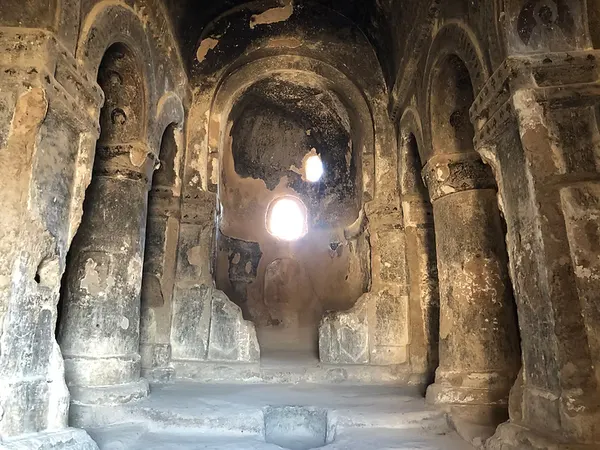
The site includes a vast cathedral-like church with towering pillars, a kitchen with soot-darkened ceilings, living quarters, stables, and defensive chambers. Fresco remnants suggest rich interior decoration, although much has eroded. The natural fortress-like formation provided security, and the complex’s multiple levels reflect both religious and practical functions.
Cultural and touristic significance
Today, Selime Monastery is a prominent stop on tours of Cappadocia, complementing sites like the Ihlara Valley and Derinkuyu Underground City. Its scale and dramatic cliffside setting exemplify Cappadocia’s synthesis of human devotion and geological wonder, making it a UNESCO World Heritage component within the Göreme National Park and the Rock Sites of Cappadocia designation.
Key facts
Location: Selime, Aksaray Province, Türkiye
Era: Byzantine period, likely 8th–10th centuries CE
Material: Volcanic tuff (soft rock)
Distinctive feature: Cathedral-sized rock-cut church
Nearby site: Northern end of the Ihlara Valley
2 guided tours include a stop at Selime Monastery.
Browse all Cappadocia attractions