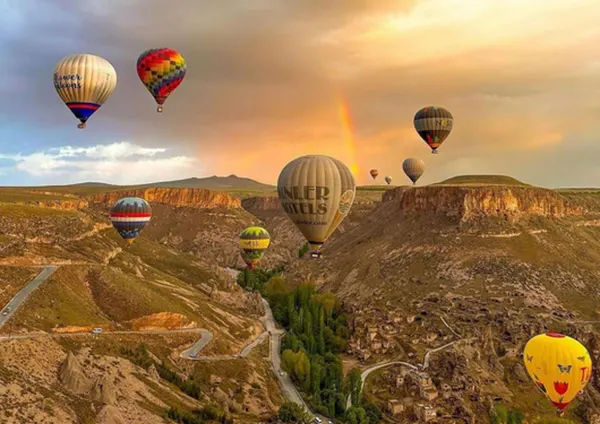
Landscape and geography Carved by volcanic erosion from the surrounding Mount Erciyes formations, Soğanlı Valley extends roughly 25 kilometers with a series of steep cliffs and tuff cones. Its fairy chimneys and soft rock formations are characteristic of Cappadocia’s geological evolution. The valley’s terrain supports walking trails connecting small villages, gardens, and historic ruins.
Historical significance The valley served as a Byzantine monastic center, sheltering hermits and religious communities. Numerous rock-cut churches, such as Karabaş, Tokalı, and Yılanlı, preserve frescoes depicting biblical scenes. These artworks provide insight into medieval Anatolian Christian art and local adaptation of Orthodox iconography.
Cultural and contemporary life The nearby Soğanlı village continues to reflect rural Anatolian traditions, with stone houses and handmade textile crafts. Locals are known for producing “Soğanlı dolls,” fabric souvenirs representing village attire. Tourism remains modest compared to Göreme or Ürgüp, giving visitors a quieter, more traditional Cappadocian experience.
Key facts
Location: Yeşilhisar District, Kayseri, Türkiye
Region: Southern Cappadocia
Notable features: Rock-cut churches, monasteries, and pigeon houses
Era of major use: Byzantine period (9th–13th centuries)
Primary activity: Cultural tourism and hiking
Tours Visiting Soğanlı Valley
2 guided tours include a stop at Soğanlı Valley.
Cappadocia Green Tour — 6 hours, from €45. Step off the beaten path and into the hidden heart of Cappadocia, where ancient underground cities, whispering valleys, and rock-carved
Private Cappadocia Green Tour — 7 hours, from €260. Discover the natural beauty and hidden heritage of southern Cappadocia with our Private Green Tour, designed for travelers who want