Cappadocia Adventures
Cappadocia Adventures

Did you know that making traditional Turkish ravioli was once considered a test of a young bride's cooking skills?
Preparing mantı requires patience, precision, and a great deal of practice, especially when it comes to shaping those tiny pieces of dough!
The preparation begins by rolling out the dough into a thin sheet using a rolling pin. It is then cut into small squares, each filled with seasoned minced meat and carefully folded by hand.
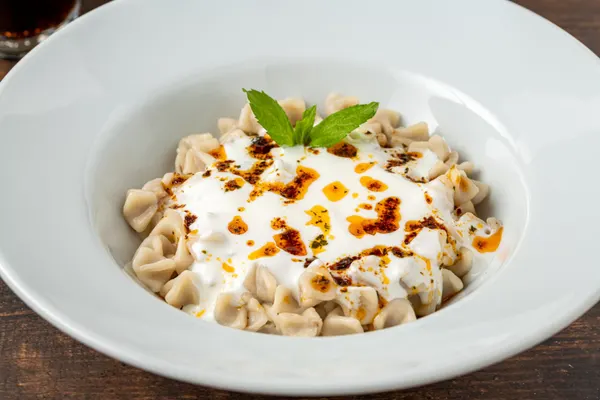
Once prepared, the dumplings are boiled until tender and served with delicious sauces, traditionally including garlic yoghurt and melted butter with spices.
Small in size, but absolutely packed with flavor!
Traditional Kayseri Mantısı is made with thinly rolled dough, a seasoned minced meat filling, and a garlic yoghurt sauce, finished with melted butter and aromatic spices.
Main Ingredients
Dough
Wheat flour
Eggs
Water
Salt
Meat Filling
Minced beef or lamb
Onions
Salt
Black pepper
Red pepper flakes (optional)
Yoghurt Sauce
Plain Turkish yoghurt
Garlic
Salt
Butter & Spice Topping
Butter
Dried mint
Red pepper flakes
Paprika or pul biber (chili peper)
Tomato or pepper paste (optional)
Optional Garnishes
Sumac
Dried mint
Fresh parsley
Cooking Method
The preparation of Kayseri Mantısı begins with a simple mixture of flour, eggs, water, and salt. These ingredients are kneaded into a firm dough and left to rest for approximately 15–20 minutes.
Once rested, the dough is rolled into very thin sheets, approximately 1–1.2 mm thick, and carefully cut into tiny squares, traditionally around 1–1.5 cm wide.
Meanwhile, the filling is prepared by combining minced beef or lamb with finely chopped onions, salt, black pepper, red pepper flakes, and, traditionally, a touch of dried basil (reyhan).
A small amount of filling is placed in the center of each square. The corners are then carefully brought together and pinched by hand to create the characteristic shape of Kayseri Mantısı.
And this is where the real craftsmanship begins! Traditionally, Kayseri's cooks are known for making their mantı so small that dozens of pieces can fit into a single spoon.
Once prepared, the dumplings are gently boiled in salted water for approximately 15 minutes, until the dough is cooked but still holds its shape.
Meanwhile, a rich sauce is prepared by melting butter with tomato paste and red pepper. Separately, plain yoghurt is mixed with crushed garlic and a pinch of salt.
Finally, the cooked mantı is served with its flavorful butter and tomato sauce, topped with garlic yoghurt and, optionally, sprinkled with sumac and dried mint.
And there you have it! One of Kayseri's most beloved traditional dishes, prepared with patience, craftsmanship, and generations of culinary knowledge.
How Did Mantı Become a Tradition?
We are now exploring the history of Mantı, which made its way all the way to Anatolia. But before arriving here, Mantı had already travelled through many other destinations!
Today, we widely recognize Mantı as a signature dish of Turkish cuisine. And it certainly is! However, its culinary heritage extends far beyond modern Türkiye, with connections to the food traditions of Central Asia and the wider Asian continent.
In China, culinary traditions included mantou (steamed buns), while similar dumpling dishes, such as mandu, can be found in other Asian cuisines.
It is believed that nomadic Turkic and Mongol communities helped spread various dumpling traditions across Central Asia. And they had practical reasons for doing so!
These foods were relatively easy to transport and prepare during long journeys. Depending on the preparation method and conditions, dumplings could be dried or frozen, then cooked by boiling over a campfire.
Similar traditions can also be found in Kazakh, Kyrgyz, Uzbek, Uyghur, and Afghan cuisines.
But the final touch happened in Anatolia.
Following the migration of Oghuz Turkic tribes into Anatolia, they brought many of their culinary traditions along with them.
During the Ottoman era, Mantı even appeared in records associated with the Ottoman Imperial Palace kitchens, including accounts dating from 1469 to 1474.
And today, Mantı has made its way from Central Asian traditions to the Ottoman Palace and eventually to our modern tables. Kayseri Mantısı also gained official recognition through its geographical indication registration in 2009.
From the traditions of nomadic communities to the tables of the Ottoman Palace!
How to Give Mantı Its Shape?
Here comes the most challenging part of preparing traditional Kayseri Mantısı!
Unlike ordinary dumplings, Kayseri Mantısı is famous for its incredibly small size and delicate, handmade shape.
First, the dough is rolled into a thin sheet, approximately 1–1.2 mm thick, and cut into tiny squares measuring around 1.5 cm on each side.
A small amount of seasoned minced meat is then placed in the center of each square.
Using the thumbs and index fingers of both hands, the corners of the dough are carefully brought together above the filling and gently pinched to seal it. The corners do not have to overlap perfectly; they remain slightly offset, creating the characteristic small, elongated bundle shape of traditional Kayseri Mantısı.
The most important part is to seal the dough without crushing the delicate filling inside.
But how small should they be?
According to a famous Kayseri tradition, a skilled cook should be able to fit 40 pieces of Mantı into a single spoon!
Although this is a traditional measure of craftsmanship rather than an everyday requirement, it demonstrates the remarkable patience and precision involved in preparing authentic Kayseri Mantısı.
And that is why making Kayseri Mantısı is not simply cooking. It is a demonstration of patience, tradition, and craftsmanship passed down through generations.
Why Was It Considered a "Test for Brides"?
Well, this is actually a little bit of traditional humor used to measure the cooking skills of a bride-to-be!
In traditional Anatolian society, household responsibilities were often divided according to the social expectations of the time. Men were generally expected to provide for and protect their families, while women traditionally took responsibility for managing the household, preparing meals, and making the most of whatever resources were available.
These customs were deeply connected to the challenges of everyday life, where survival required cooperation, resourcefulness, and hard work from everyone in the family.
And cooking was certainly no exception!
Mantı was one of the dishes that required not only cooking skills but also patience, creativity, and remarkable attention to detail.
According to a well-known local tradition, a mother-in-law would supposedly test her future daughter-in-law's cooking skills by handing her a spoon and asking her to fit 40 pieces of her handmade Mantı into it.
If she could fit all 40 pieces, she was considered a skilled cook, well-prepared for the culinary responsibilities traditionally associated with married life.
And if she couldn't?
Well, apparently, she still had a few things to learn!
Of course, this story is best understood as a playful reflection of traditional social expectations rather than a serious measure of someone's abilities.
Times have certainly changed, but the humor and craftsmanship behind the tradition have remained part of Kayseri's culinary identity.
After all, making 40 pieces of Mantı fit into a single spoon is a challenge for anyone, regardless of who they are!
Where Can I Try It?
If you've read all the way here, it is time to discover exactly how you can taste this delicious little traveller!
Our recommendation is to join a traditional Turkish Cooking Class.
Why?
Because it gives you the opportunity to experience the everyday lives of local people, discover their culinary traditions, and learn the practical skills behind the dishes they have prepared for generations.
And the best part?
You get to enjoy what you've made with your own hands!
You can learn more about our Cooking Class below!
1 guided tour includes a stop at Often Called “Turkish Ravioli” Exactly called “Mantı”.
Browse all Cappadocia attractions