Cappadocia Adventures
Cappadocia Adventures

Who knew an eggplant could taste this good?
Meet Karnıyarık, one of Anatolia's most beloved traditional dishes!
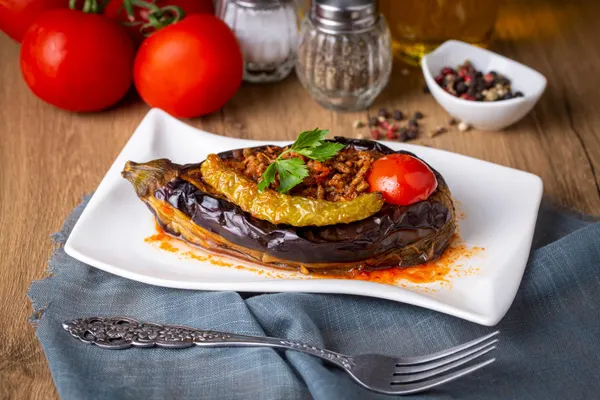
Imagine a perfectly cooked eggplant, gently split open and generously stuffed with juicy minced meat, fresh vegetables, tomatoes, and aromatic spices.
Sounds simple, right?
Well, the magic is in the preparation!
Karnıyarık is proof that Turkish cuisine can turn an ordinary vegetable into an extraordinary culinary masterpiece.
Rich, comforting, and packed with flavor, this is definitely one dish you shouldn't leave Türkiye without trying!
Not a meat lover? No worries!
Say hello to Karnıyarık's vegetarian cousin, İmam Bayıldı, which literally translates to "The Imam Fainted."
And here's where the story gets even better!
According to a popular legend, an imam tasted this delicious eggplant dish and was so overwhelmed by its incredible flavor that he actually fainted!
Whether the story is true or not, we can certainly understand the reaction.
İmam Bayıldı is traditionally prepared with eggplant, onions, tomatoes, garlic, and plenty of olive oil.
Unlike Karnıyarık, which is usually served hot, İmam Bayıldı is often enjoyed at room temperature or slightly chilled, allowing its olive oil-rich flavors to develop beautifully.
No meat, just pure Mediterranean goodness!
Two dishes, one humble eggplant, and a whole lot of Turkish culinary magic!
Main Ingredients – KarnıyarıkHave you ever wondered how something as simple as an eggplant could become one of Türkiye's most beloved home-cooked dishes?
Well, the secret is a delicious combination of fresh vegetables, seasoned minced meat, and a little Anatolian kitchen magic!
Here are the main ingredients you'll need:
For the Eggplants
Medium-sized eggplants
Olive oil or vegetable oil
Salt
For the Meat Filling
Minced beef or lamb
Onions, finely chopped
Fresh tomatoes
Green peppers
Garlic
Tomato paste
Fresh parsley
Black pepper
Red pepper flakes (optional)
Salt
For the Sauce and Garnish
Tomato paste
Water
Tomato slices
Green peppers
The beauty of Karnıyarık is that it doesn't require a collection of expensive or exotic ingredients.
Most of these vegetables are everyday essentials in Turkish kitchens!
But when they're prepared together, something wonderful happens.
The eggplant becomes beautifully tender, the meat filling develops rich, savory flavors, and the tomato sauce brings everything together.
Each ingredient plays its part, creating a dish that is both wonderfully simple and incredibly satisfying.
Simple ingredients. Wonderful results.
Apparently, Turkish grandmothers figured out long ago that delicious food doesn't need to be complicated!
Cooking Methods – How Is Karnıyarık Prepared?Let's get cooking!
The preparation begins with the star of the dish.
The eggplant!
First, the eggplants are washed and partially peeled in alternating strips, creating their traditional striped appearance.
Some cooks prefer to soak them briefly in salted water before preparing them.
Then comes the first important step.
Softening the Eggplants!
Traditionally, eggplants are fried until they become tender and develop a beautiful golden appearance.
However, roasting them in the oven with a little oil is another popular method, especially for those who prefer a lighter version.
Either way, the goal is the same: beautifully softened eggplants that are ready to absorb all those wonderful flavors!
Preparing the Meat Filling!
Meanwhile, onions and green peppers are gently sautéed in a pan until softened.
Minced meat is added and cooked until browned.
Then come the tomatoes, garlic, tomato paste, and seasonings.
The mixture is cooked until the flavors combine into a delicious, savory filling.
Fresh parsley is often added toward the end to give the mixture an extra touch of freshness.
And here's where things become interesting!
Giving Karnıyarık Its Famous Shape!
The softened eggplants are carefully placed in a baking dish.
A lengthwise opening is made in each eggplant, without cutting all the way through, creating a pocket for the filling.
This is where the name Karnıyarık, meaning something close to "split belly," comes from!
Yes, Turkish cuisine has a rather entertaining way of naming its dishes!
The meat mixture is generously spooned into each eggplant.
Tomato slices and green peppers are then placed on top, giving the dish its recognizable appearance.
A light tomato-based sauce, usually prepared by mixing tomato paste with water, is poured around the eggplants.
The Final Touch – Into the Oven!
The stuffed eggplants are baked at approximately 180–190°C until the sauce is bubbling and the ingredients are thoroughly cooked and tender.
This usually takes around 20–30 minutes after assembly, depending on the oven and the size of the eggplants.
And the result?
Beautifully softened eggplants filled with savory minced meat, surrounded by a rich tomato sauce!
Karnıyarık is traditionally served warm, often accompanied by Turkish rice pilaf and perhaps a refreshing bowl of cacık, a delicious combination of yogurt, cucumber, garlic, and herbs.
One bite, and you'll understand why this dish has remained a favorite in Turkish home kitchens for generations!
How Did Karnıyarık Become a Symbol of Anatolian Cuisine?Karnıyarık, which roughly translates to "split belly," is yet another example of the remarkable creativity of Anatolian cooking.
Basically, the dish is prepared by splitting open a whole eggplant and stuffing it with a delicious mixture of minced meat, tomatoes, vegetables, and aromatic spices.
Sounds simple, doesn't it?
But its culinary background is much more interesting than you might imagine!
The Story Begins in Anatolia!
Eggplant has been known in Anatolia for centuries, and its place in Turkish cooking developed through the culinary traditions of different civilizations.
Its history can be traced back through the Seljuk and Ottoman periods, although the exact origins of modern Karnıyarık remain uncertain.
Some popular stories even associate the creation of the dish with a Seljuk ruler who particularly enjoyed eggplants.
According to these tales, a palace chef decided to impress his ruler by stuffing an eggplant with seasoned meat.
The ruler supposedly loved the result, and the dish gradually became popular throughout Anatolia.
An entertaining story, isn't it?
However, there is no reliable historical evidence confirming that this particular event actually happened.
What we do know is that eggplant became an important ingredient in Ottoman cuisine.
Historical records from the 16th century already describe stuffed eggplant preparations, demonstrating how deeply this vegetable had become connected to Anatolian culinary traditions.
Over generations, cooks continued experimenting with different fillings, cooking methods, and seasonings.
And eventually, dishes such as the Karnıyarık we know today became beloved parts of Turkish home cooking.
But the story doesn't end there!
Meet İmam Bayıldı – The Imam Fainted!
Another famous eggplant dish developed within the Ottoman-Turkish culinary tradition.
This time, however, there was no minced meat involved!
Instead, eggplants were prepared with onions, tomatoes, garlic, and generous amounts of olive oil.
The result became known as İmam Bayıldı, meaning "The Imam Fainted."
And believe it or not, there are several fascinating legends explaining this rather unusual name!
The First Legend – Fainted From Happiness!
According to the most popular story, an imam, a Muslim religious leader, was served this delicious eggplant dish.
After taking his first bite, he was so overwhelmed by its extraordinary taste that he fainted from pure pleasure!
Now, we cannot confirm whether this actually happened.
But considering how delicious İmam Bayıldı can be, perhaps we shouldn't judge him too quickly!
The Second Legend – The Expensive Olive Oil!
Another popular story offers a completely different explanation.
According to this legend, an imam married the daughter of a wealthy olive oil merchant.
As part of her dowry, the bride brought twelve jars of exceptionally fine and expensive olive oil.
Following their marriage, she began preparing a delicious eggplant dish using generous amounts of this precious ingredient.
The imam loved the food and continued enjoying it day after day.
However, after twelve days, the entire olive oil supply had apparently disappeared!
When the imam discovered how much expensive olive oil his wife had used, he fainted from shock.
Not because of the incredible taste this time, but because of the incredible expense!
Apparently, even in Ottoman times, household budgets could be a serious concern!
The Third Legend – A Meal After Fasting!
Another version of the story connects the dish to an imam who had been fasting.
According to this lesser-known tale, after spending many hours without eating, the imam finally enjoyed a generous serving of the rich, olive oil-based dish.
The combination of hunger, excitement, and a particularly satisfying meal supposedly caused him to faint.
Although this story is also part of culinary folklore rather than verified history, it certainly adds another entertaining explanation to the dish's unusual name.
So, Which Story Is True?
Well, that's the interesting part!
Nobody knows for certain.
These stories have been passed down through generations, becoming part of the folklore surrounding one of Türkiye's most recognizable eggplant dishes.
What we can say with confidence is that both Karnıyarık and İmam Bayıldı represent the creativity and resourcefulness of Anatolian cooking.
Using ordinary ingredients such as eggplant, onions, tomatoes, and herbs, generations of cooks developed dishes that remain popular today.
Karnıyarık offers a rich and satisfying combination of meat and vegetables, while İmam Bayıldı celebrates the lighter, olive oil-based traditions of Mediterranean cooking.
Two different preparations, two wonderful flavors, and centuries of culinary tradition!
And as for the famous fainting imam?
Well, we certainly hope it was the delicious taste that made him faint, rather than the olive oil bill!
One thing is certain: these dishes are absolutely worth trying!
Where to Eat Karnıyarık – Or Better Yet, Learn to Make It!Now, you could certainly enjoy Karnıyarık at a traditional Turkish restaurant.
And we'd absolutely recommend giving it a try!
In fact, Karnıyarık is one of those dishes that truly represents the comforting flavors of Turkish home cooking.
You may find it in traditional local restaurants, particularly those specializing in homemade Anatolian dishes.
But here's a question.
Wouldn't it be more interesting to learn how to prepare it yourself?
Imagine joining a cooking class in Cappadocia, guided by a local Anatolian woman who knows the traditional methods and family recipes behind the dish.
Instead of simply ordering something from a restaurant menu, you'll have the opportunity to discover how the ingredients are prepared, combined, and transformed into something delicious.
You begin with fresh eggplants, vegetables, and carefully selected ingredients.
Your instructor shows you how to prepare the meat filling, soften the eggplants, and assemble the dish.
And then comes your turn!
You'll get your hands involved in the preparation, learning practical cooking techniques that have been passed down through generations of Anatolian families.
Perhaps your first eggplant doesn't look quite as beautiful as the instructor's.
Don't worry!
Turkish grandmothers have had decades of practice. You're allowed to make a few mistakes!
And the experience isn't just about following a recipe.
It's also about understanding the traditions, resourcefulness, and everyday life behind Anatolian cuisine.
For generations, local families have created wonderful meals using seasonal vegetables, accessible ingredients, and cooking techniques developed through experience.
Many of these dishes reflect a simple but important philosophy: make the most of what you have, waste as little as possible, and never underestimate the value of a good homemade meal!
And once everything is cooked, the best part begins.
You sit down and enjoy the Karnıyarık you've helped prepare.
Suddenly, the food tastes a little different.
Not because the ingredients have changed.
But because you now understand the effort, tradition, and techniques behind every bite.
And when you return home?
You can surprise your family and friends with an authentic Turkish dish!
Imagine inviting your friends over, placing a beautifully prepared Karnıyarık on the table, and casually mentioning that you learned to cook it during your visit to Cappadocia.
Not a bad souvenir, right?
After all, eating Karnıyarık is wonderful. But learning to make it from a local Anatolian cook is a memory you can take home!
Discover traditional Turkish cooking through a hands-on Cappadocia cooking class, where available menus may include this beloved dish.
Whether you're an experienced home cook or someone who has never prepared an eggplant before, the experience offers a wonderful opportunity to discover the flavors and traditions of Anatolia.
Come hungry, leave inspired, and perhaps become the new Karnıyarık expert in your family!
Afiyet olsun!
1 guided tour includes a stop at Try Not To Faint After Trying This Eggplant! Karnı Yarık and İmam Bayıldı.
Browse all Cappadocia attractions