Cappadocia Adventures
Cappadocia Adventures

Have you ever wondered what happens when fresh vegetables meet centuries of Anatolian culinary creativity?
Well, Turks have a rather delicious answer: We stuff them!
And believe us, we take stuffing very seriously.
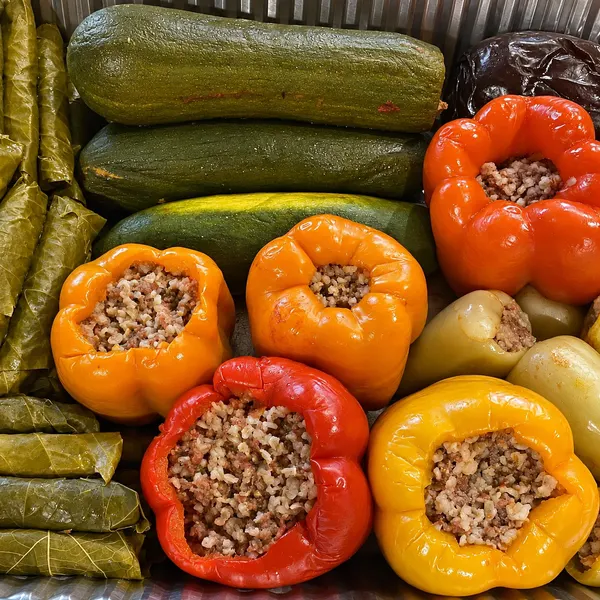
Meet Dolma, one of the most beloved traditional dishes of Turkish cuisine, where ordinary vegetables are transformed into extraordinary little packages of flavor.
The name might sound simple, but don't let that fool you. Behind every beautifully stuffed pepper, eggplant, tomato, or zucchini lies a culinary tradition shaped by generations of Anatolian families.
The preparation begins by carefully hollowing out fresh vegetables, making room for a wonderfully seasoned mixture of rice, bulgur, aromatic herbs, spices, and sometimes minced meat.
But the magic doesn't stop there!
Once stuffed, the vegetables are arranged closely together and gently cooked, traditionally in a covered pot and sometimes in earthenware vessels. As they simmer, the vegetables soften, the grains absorb the delicious cooking juices, and all those wonderful ingredients begin working together.
The result?
A colorful, hearty, beautifully comforting dish that proves something Turkish grandmothers have known for centuries: Sometimes the most extraordinary flavors come from the simplest ingredients.
And if you're visiting Cappadocia, this is one of those dishes you really shouldn't leave without experiencing!
The beauty of Dolma is its versatility. Different regions, households, and generations have their own special touches.
Some prefer a rich meat filling, while others celebrate the simplicity of rice, bulgur, and fragrant herbs.
Either way, the ingredients are wonderfully straightforward!
Green bell peppers (Dolmalık Biber)
Fresh tomatoes
Eggplants (optional)
Zucchini (optional)
Rice or fine bulgur (Düğü)
Minced lamb or beef (optional)
Finely chopped onions
Tomato paste
Fresh parsley
Dried mint
Olive oil or butter
Salt
Black pepper
Red pepper flakes
Ground cumin (optional)
Tomato paste
Water or meat broth
Olive oil or butter
Lemon juice (optional)
A Little Culinary Secret: There is no single universal Dolma recipe! Walk into different Anatolian homes, and you may discover slightly different fillings, seasoning combinations, and preparation techniques.
And naturally, every grandmother will insist that hers is the best.
We strongly recommend not arguing with them!
From Ancient Stuffing Traditions to Ottoman Palace Kitchens
Let's travel back in time, because Dolma has quite a story to tell!
First, we should begin with its name.
The Turkish word Dolma comes from dolmak, meaning "to be filled." In culinary terms, it refers to food prepared by filling vegetables or other ingredients with a delicious stuffing.
Simple name. Brilliant concept!
The broader tradition of stuffing and wrapping food has ancient roots, with related culinary practices appearing across
Persian, Greek, and other Mediterranean and Middle Eastern food cultures.
However, identifying exactly who invented the first Dolma is much more complicated than it sounds.
And with a dish this delicious, we can understand why so many cultures would love to claim it!
Now, this is where things get particularly interesting.
If there was one thing the Ottomans knew how to appreciate, it was a properly prepared feast!
Ottoman cuisine brought together culinary traditions from Anatolia, the Balkans, the Middle East, and beyond. Over centuries, these influences helped create an exceptionally diverse food culture.
And Dolma certainly found its place within it.
Stuffing techniques were adapted to different ingredients, with vegetables such as eggplants, peppers, tomatoes, and zucchini eventually becoming familiar parts of the tradition.
The fillings also grew more elaborate.
Alongside meat, cooks experimented with rice, aromatic herbs, carefully balanced spices, and, in some variations, ingredients such as pine nuts, currants, and cinnamon.
Imagine the combination!
A beautifully tender vegetable, a fragrant filling, delicate spices, and the wonderful aroma of slow cooking.
Not bad for something called "stuffed," right?
The Ottoman imperial kitchens, known as Matbah-ı Âmire, were responsible for preparing food for the palace and its extensive household.
These kitchens were not simply places where people cooked. They were enormous culinary operations where ingredients, preparation techniques, and elaborate dining traditions came together.
Dolma and related stuffed dishes became part of Ottoman culinary culture, appearing in various forms within the broader palace and household cooking traditions.
And when a dish finds its way into the culinary world of an empire, you know it has earned a rather impressive reputation!
But here's something even more fascinating.
Dolma never belonged to palace tables alone.
Its versatility made it equally suitable for everyday household cooking. Families could adapt the filling according to the
ingredients available, their budgets, and the season.
The palace might have enjoyed elaborate varieties, but Anatolian families had their own delicious interpretations.
And that adaptability is part of what has kept Dolma alive for generations.
Of course, the story doesn't end in Anatolia.
Today, Dolma and closely related stuffed dishes are found across Greece, the Balkans, Iran, Arab countries, and many other regions.
Different cultures have developed their own recipes, ingredients, and cooking methods.
Some prefer meat-filled versions. Others favor rice, herbs, and olive oil. Certain recipes are served hot, while others are especially delicious cold.
Each region brings something different to the table.
But if you're wondering who makes the best Dolma?
Well...
We Turks have a very humble opinion: We are absolutely at the peak of this business!
No offense to our neighbors. We love you.
But we're not surrendering the kitchen that easily!
Now, let's bring the story back to the extraordinary landscapes of Cappadocia!
Today, Cappadocia welcomes visitors with its magnificent fairy chimneys, cave hotels, beautiful valleys, and colorful hot
air balloons.
But life in this region wasn't always about breathtaking views and unforgettable holidays.
For generations, local communities had to adapt to a challenging environment, especially during the cold winter months.
Long before refrigerators, modern supermarkets, and year-round access to fresh vegetables, preserving food was an essential part of everyday life.
And Anatolian people became remarkably resourceful!
One of the most practical preservation techniques was sun-drying.
During the warmer months, families harvested vegetables and prepared them for storage. Peppers, eggplants, and other suitable produce could be hollowed out, threaded together, and left to dry under the sun.
The goal was simple: preserve the summer harvest so it could be enjoyed when fresh ingredients became harder to obtain.
Clever, isn't it?
But here's where Anatolian culinary creativity shines.
Instead of seeing dried vegetables merely as preserved food, local cooks turned them into something genuinely delicious.
Before cooking, the dried vegetables could be softened in hot water, filled with seasoned rice, bulgur, or meat mixtures, and slowly simmered until tender.
This is one of the beautiful connections between traditional Dolma and the food-preservation practices of Anatolia, including Cappadocia.
What began as a practical response to seasonal challenges also contributed to a wonderfully rich culinary heritage.
And that's what makes the history of Anatolian cuisine so fascinating.
Many traditional recipes weren't invented simply to impress guests or create fancy dinner tables.
They were shaped by necessity, patience, resourcefulness, and the determination to make the most of what nature provided.
Yet somehow, those practical solutions became dishes we still celebrate today.
From surviving difficult winters to delighting travelers from around the world – that's quite a journey for a stuffed pepper!
Now that you've discovered the history behind Dolma, it's time to find out how this delicious little masterpiece comes
together.
Don't worry, you don't need to be an Ottoman palace chef.
Although a little patience and a generous appetite certainly help!
Begin by thoroughly washing the peppers, tomatoes, eggplants, or zucchini.
Carefully remove their tops and hollow out the insides, creating enough space for the filling without damaging the outer walls.
The vegetables should remain firm enough to hold their shape during cooking.
Think of them as little edible containers waiting for something wonderful to happen!
In a large mixing bowl, combine rice or fine bulgur with finely chopped onions, tomato paste, fresh parsley, dried mint,
olive oil, salt, and spices.
For a richer version, minced lamb or beef can also be added.
Mix the ingredients until everything is evenly combined.
This is where the personality of Dolma begins to develop, with each herb and spice contributing its own delicious touch.
And yes, the aroma is already tempting.
But we're only getting started!
Carefully spoon the filling into each hollowed vegetable.
Avoid packing the mixture too tightly, as the rice or bulgur will expand during cooking.
Once filled, cover the openings with small tomato slices.
Apart from adding flavor, these little tomato lids help keep the filling inside.
A simple but wonderfully clever technique!
Place the stuffed vegetables upright and closely together in a deep cooking pot.
Arranging them snugly helps prevent them from tipping over or breaking apart while cooking.
Traditional heavy-bottomed pots, including copper or earthenware vessels, may be used depending on the household
and cooking method.
And if you happen to have a beautiful traditional clay pot?
Even better for the atmosphere!
Mix tomato paste with warm water or broth, adding a little olive oil or butter.
Gently pour the mixture around the stuffed vegetables without completely submerging them.
As the Dolma cooks, the filling absorbs the flavorful liquid while the vegetables release some of their own natural juices.
This is when all those individual ingredients begin becoming one delicious dish.
Cover the pot and bring the liquid to a gentle boil.
Then reduce the heat and allow the Dolma to simmer slowly for approximately 40–60 minutes, depending on the size of
the vegetables and the ingredients used.
The goal is to achieve tender vegetables and fully cooked filling without allowing anything to fall apart.
Traditional Dolma rewards patience.
And believe us, some things are simply too delicious to rush!
Once the Dolma is fully cooked, turn off the heat and allow it to rest for approximately 10–15 minutes.
This helps the flavors settle and makes serving easier.
Meat-filled Dolma is traditionally enjoyed warm, often accompanied by fresh Turkish yogurt or a refreshing side of Cacık.
Now comes the most important step.
Take your first bite and understand why generations of Anatolian families have kept this tradition alive!
Afiyet olsun!
So, you've discovered the ingredients.
You've learned about the Ottoman culinary heritage.
You now understand how Anatolian families transformed simple vegetables into dishes that survived generations.
Wonderful!
But we have one little problem.
You still haven't tasted what you've been reading about!
And more importantly, you haven't experienced the magic of making it yourself.
Because there's something we truly believe:
Reading makes you aware, but experiencing takes you far beyond awareness.
Reading can teach you what something is, where it comes from, and how it works. But experiencing it allows you to feel the
tradition, understand the effort, appreciate the people behind it, and create a memory that stays with you.
Reading gives you knowledge. Experiencing gives that knowledge a heartbeat. And what you genuinely feel is
what you never forget.
That's exactly why we believe a traditional cooking class in Cappadocia is more than just another activity to add to your
itinerary.
It's an opportunity to become part of the culinary culture you've spent so much time discovering.
Imagine stepping into a welcoming local kitchen in Cappadocia.
Fresh vegetables are waiting on the table. Traditional ingredients are carefully arranged, the fragrance of herbs fills the air,
and a local Turkish woman is ready to introduce you to the recipes and cooking techniques passed down through
generations.
No complicated restaurant menus.
No mysterious ingredients hidden behind kitchen doors.
And definitely no need for professional cooking experience!
Just you, fresh local ingredients, a welcoming atmosphere, and the opportunity to experience traditional Anatolian
cooking firsthand.
Depending on the cooking class you choose, you may learn to prepare regional dishes, discover traditional techniques,
and understand why certain ingredients have remained essential to local kitchens for so long.
You'll discover how vegetables are prepared, how fillings are seasoned, and why small details can make such a big
difference to the final flavor.
And perhaps you'll uncover a few secrets that Turkish grandmothers don't usually reveal so easily!
Now comes the fun part.
Instead of watching someone else create delicious food, you're going to be the cook!
You'll chop, mix, season, prepare, and discover how much care goes into even the simplest-looking dishes.
Maybe you'll add a little too much spice.
Maybe your first stuffed pepper won't look quite as elegant as the instructor's.
Maybe you'll discover that preparing traditional food requires considerably more patience than eating it.
That's perfectly fine!
In fact, that's part of the beauty of the experience.
Nobody expects you to become a master chef in one afternoon.
But by participating, asking questions, and learning directly from a local cook, you'll begin to appreciate the creativity and
effort behind Anatolian cuisine.
And the best part?
At the end of the experience, you get to enjoy the food you've helped prepare!
Trust us, a dish tastes different when you've taken part in making it.
Suddenly, the ingredients have meaning.
The preparation has a story.
And the flavors become connected to something much more personal than a restaurant meal.
For centuries, cooking in Anatolian households has been much more than a way of satisfying hunger.
It has brought families together, encouraged the sharing of knowledge, and helped communities make the most of their
seasonal ingredients.
Recipes passed from mothers to daughters, grandmothers to grandchildren, and neighbors to neighbors became a living
part of local culture.
The techniques behind these dishes reflect not only culinary creativity but also the resourcefulness of people who lived
through difficult seasons and learned to waste as little as possible.
When you participate in a cooking class in Cappadocia, you're discovering a little piece of that heritage.
You're learning why traditional cooking methods matter, how local ingredients are used, and how recipes carry the stories
of the people who prepare them.
And unlike simply reading about food, you get to experience the process with your own hands.
That's something no photograph, menu description, or travel article can fully reproduce.
Let's imagine something.
Your holiday has ended.
You've returned home, unpacked your suitcase, and shown your friends hundreds of incredible photographs of
Cappadocia.
The fairy chimneys.
The hot air balloons.
The breathtaking valleys.
All unforgettable, of course!
But one evening, you decide to prepare a traditional Turkish dish for your family or friends.
You start chopping the vegetables.
You remember the way your local instructor prepared the filling.
You recognize the fragrance of the spices.
And suddenly, for a brief moment, you're back in that little kitchen in Cappadocia.
You remember the laughter, the atmosphere, and the satisfaction of preparing something delicious with your own hands.
And that's when you realize you didn't simply take a recipe home. You brought home an experience.
A story you can share.
A skill you can practice.
A memory you can recreate.
And perhaps even a delicious excuse to invite everyone over for dinner!
There are countless wonderful things to experience in Cappadocia.
You can admire the landscape, wander through ancient valleys, explore underground cities, and watch colorful balloons
float above the fairy chimneys.
But if you truly want to discover the heart of Anatolian culture, you should also experience its kitchen.
Because food tells stories that history books sometimes cannot.
Stories about family, survival, creativity, generosity, and the extraordinary ability to turn humble ingredients into
something memorable.
And what better way to understand those stories than to prepare a traditional dish alongside the people who continue to
celebrate them?
Recipes can be forgotten. Experiences become memories. And memories seasoned with delicious food? Those last
a lifetime!
So come hungry.
Bring your curiosity.
Don't be afraid to make a little mess.
And most importantly, leave room for something delicious!
Discover our Cooking Class in Cappadocia and turn your next meal into a story worth telling.
After all, you can read a thousand recipes.
But you only need one unforgettable cooking experience to understand why Anatolia tastes so special.
Kolay gelsin! – May your work come easily!
Afiyet olsun! – Enjoy your meal!
1 guided tour includes a stop at Vegetables, But Not The Ordinary Ones. Dolma!.
Browse all Cappadocia attractions