Cappadocia Adventures
Cappadocia Adventures

Before we introduce you to this extraordinary experience, there's something we'd love to explain.
What exactly is a Dervish?
You may have seen photographs of people dressed in flowing white robes, spinning gracefully with their arms extended toward the sky.
Beautiful, isn't it?
But what if we told you that there's a much deeper meaning behind every movement?
Let's travel back through history for a moment.
The word "Dervish" refers to a follower of a Sufi spiritual path within Islam, traditionally associated with humility, simplicity, devotion, and the pursuit of spiritual understanding.
To make the concept a little easier to imagine, you might think of certain similarities with the monastic traditions found in other religions, although their beliefs and practices are quite different.
And this brings us to one of the most remarkable figures in Anatolian history.
Mevlana Celaleddin Rumi.
Born in 1207, Rumi was a renowned Islamic scholar, mystic, poet, and philosopher whose teachings emphasized love, compassion, humility, and the spiritual connection between humanity and God.
His teachings inspired the Mevlevi Sufi tradition, which was formally developed by his followers after his death.
But what does all of this have to do with whirling?
Well, here's where the story becomes truly fascinating.
More Than Just a Dance
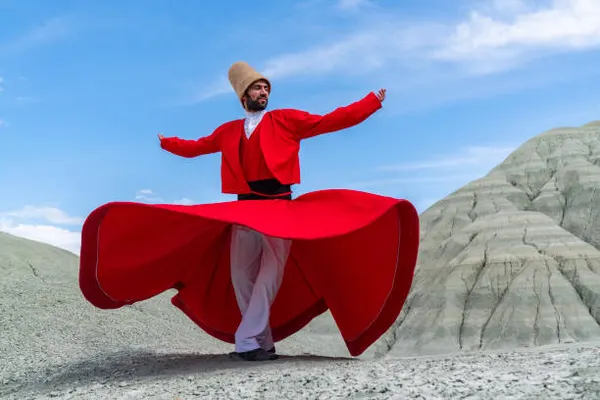
The ceremony you are about to witness is called Sema, and it's far more than a performance of spinning dancers.
For the Mevlevi tradition, Sema is a deeply symbolic spiritual ceremony representing humanity's journey toward divine love and spiritual enlightenment.
And almost every detail carries a meaning.
Let's begin with their clothing.
The Sikke – The Tall Felt Hat
The tall, brown felt hat worn by the dervishes is called a Sikke.
It symbolizes the tombstone of the ego, representing the spiritual effort to overcome pride, selfishness, and worldly attachments.
The Tennure – The White Robe
The flowing white garment is known as the Tennure.
Its white color symbolizes the shroud, representing the symbolic death of the ego and the beginning of spiritual renewal.
As the dervishes begin to whirl, their garments open beautifully, creating one of the most recognizable images of Sufi culture.
But perhaps the most fascinating detail is the position of their hands.
One Hand Toward the Sky, One Toward the Earth
During the ceremony, the dervishes traditionally raise their right hands toward the heavens, with their palms facing upward.
This gesture symbolizes receiving divine grace from God.
Meanwhile, their left hands face downward, representing the sharing of that grace with the world.
In other words, the dervish does not seek to keep divine blessings for himself, but to become a means of passing them on to others.
Pretty meaningful for something that might initially appear to be a simple spinning movement, isn't it?
Experience the Tradition in Cappadocia
You don't have to travel all the way to Konya, the city most closely associated with Rumi, to witness this fascinating tradition.
Cappadocia also offers opportunities to experience the Whirling Dervish Ceremony, often in atmospheric historical buildings or traditional stone venues.
Unlike Turkish Night, this isn't an evening of loud music, dancing, or celebration.
It's a peaceful and contemplative experience, where traditional music, carefully performed movements, and
centuries-old spiritual symbolism come together.
If you're curious about the philosophical and spiritual side of Anatolian culture, this is certainly an experience worth discovering.
Because sometimes, the most extraordinary journeys aren't about discovering a new place. They're about discovering a different way of seeing the world.
Basic Information
Experience Highlights:
Traditional Mevlevi Sema Ceremony
Whirling Dervishes
Traditional Sufi Music
Introduction to Mevlevi Philosophy and Symbolism
Historical or Traditional Venue
Time:
Evening
Please note that schedules, locations, and ceremony arrangements may vary. Visitors are kindly requested to remain quiet and respectful throughout the ceremony, as Sema carries deep spiritual significance.
No tours currently list Whirling To Challenge Your Will! as a stop. Browse all day tours or plan a custom trip.
Browse all Cappadocia attractions