Cappadocia Adventures
Cappadocia Adventures

Five Colors. Countless Discoveries. One Extraordinary Destination!
So, you've decided to visit Cappadocia!
You've probably seen those magnificent hot air balloons floating above the fairy chimneys, discovered photographs of extraordinary valleys, and perhaps even booked yourself a beautiful cave hotel.
Wonderful choice!
But then, while researching what to do during your visit, something rather confusing happens.
You come across the Red Tour.
Then the Green Tour.
Then the Blue Tour.
And just when you think you've figured everything out, somebody introduces the Yellow Tour and Mix Tour!
Now you're sitting in front of your screen, wondering:
"Am I planning a holiday or choosing colors for my living room?"
Don't worry!
You haven't accidentally entered an interior design competition.
These colorful names are simply used to distinguish different guided sightseeing experiences around Cappadocia.
But here's the interesting part.
Each tour offers something different, taking you through extraordinary landscapes, historical settlements, fascinating geological formations, and remarkable examples of Anatolian craftsmanship.
And choosing the right one can make a tremendous difference to your holiday.
So, before you book something simply because you like the color, allow us to explain everything!
We're going to break down the three most important questions:
What exactly are these colorful tours?
Why should you choose a guided tour instead of exploring independently?
When should you take them, and which tour is best for you?
And because we believe traveling should be about much more than collecting photographs, we'll also explain why experiencing these extraordinary places is far more memorable than simply reading about them.
Ready?
Let's add some color to your Cappadocian adventure!
Before explaining the tours, we need to introduce you to the region itself.
Because Cappadocia isn't simply one town, one valley, or one tourist attraction.
It's an entire historical and geographical wonderland!
The region stretches across parts of Central Anatolia, with famous destinations scattered among different valleys, towns, villages, and historical settlements.
Places such as Göreme, Uçhisar, Ortahisar, Ürgüp, and Çavuşin are among the most recognizable areas for visitors, with accommodation and tourism services concentrated in and around several of these settlements.
But here's something important.
The extraordinary attractions you've probably seen in photographs aren't all located beside one another.
Some are hidden inside valleys.
Others are carved into cliffs.
Some require a drive through the countryside.
And others?
They're literally underneath the ground!
Imagine arriving in Göreme, stepping outside your hotel, and expecting every famous Cappadocian attraction to be waiting around the corner.
Unfortunately, Cappadocia doesn't work quite like that.
Yes, there are wonderful places you can explore on foot.
But the wider region contains so many remarkable sites that transportation becomes essential if you want to discover several of them in one day.
And even if you manage to find every attraction, there's another challenge.
Understanding what you're actually looking at!
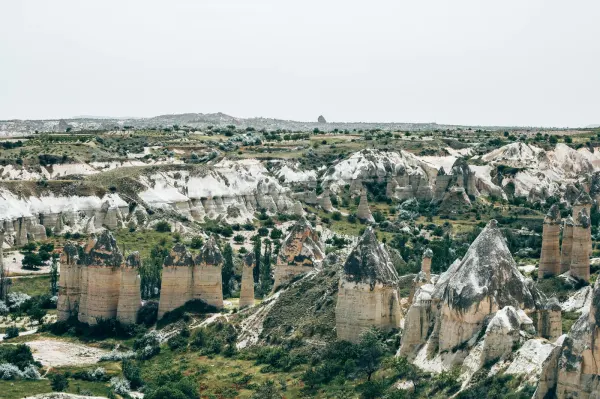
Because a strange-looking rock is much more interesting when you discover that millions of years of geological activity created it.
An abandoned cave becomes more fascinating when you learn that entire communities once lived inside it.
And an underground passage feels completely different when you understand how ancient inhabitants used it for protection.
Suddenly, these places become much more than beautiful backgrounds for photographs.
They become stories.
And that's where guided tours come in!
Red, Green, Blue, Yellow, and Mix Tours are names used by local tour operators to organize different sightseeing routes across Cappadocia.
The Red, Green, and Blue names are particularly common, while Yellow and Mix are used for additional or alternative itineraries.
These are not official government-defined routes, so the attractions, order of stops, and inclusions can differ between tour companies.
But the general idea is quite simple.
Instead of spending your holiday figuring out where to go, how to get there, and what makes each place special, a professional guide and a driver help take care of the journey for you.
Most organized sightseeing tours involve hotel pick-up, transportation between attractions, guided explanations, and a planned sequence of historical or natural sites.
Many include a lunch stop, while museum entrance fees and other services depend on the package selected.
And the best part?
You'll explore several remarkable places in a single day without constantly searching for directions.
Imagine this.
You wake up in your beautiful cave hotel.
Perhaps you've already enjoyed a traditional Turkish breakfast overlooking Cappadocia's extraordinary scenery.
Maybe you've had a cup of Turkish tea.
Maybe you've taken fifty photographs of the balloons floating above Göreme.
We understand. They're irresistible!
Then, at the arranged time, your guide and transportation arrive to begin the adventure.
Your guide welcomes you, introduces the itinerary, and explains the destinations you'll be visiting.
And just like that, your sightseeing experience begins!
Throughout the day, you'll travel between selected landmarks, enjoy panoramic viewpoints, discover historical attractions, and hear the fascinating stories behind them.
You'll have opportunities to take photographs, ask questions, and appreciate the landscapes.
Depending on your itinerary, you might also visit workshops to observe traditional local craftsmanship.
And of course, there's usually a chance to refuel with a delicious lunch.
Because even the most enthusiastic history lover eventually gets hungry!
At the end of the day, you'll return to your hotel with a much better understanding of the region.
And hopefully, a camera filled with incredible photographs!
No complicated planning. No unnecessary confusion. Just history, nature, culture, and adventure!
Of course you can!
Cappadocia isn't some mysterious forbidden kingdom where visitors are required to travel with an official escort.
There are several ways to explore the region independently.
For example, you could:
Hire a taxi for the day.
Rent a car and drive between attractions.
Use public transportation where suitable services are available.
Walk or hike between accessible valleys and nearby destinations.
Arrange private transportation and explore at your own pace.
All perfectly reasonable options!
And for some travelers, independent exploration is exactly what they prefer.
But here's where things become interesting.
Getting somewhere and truly understanding somewhere are two completely different things.
Let's explain.
Imagine renting a car and setting off toward Cappadocia's famous attractions.
You've got your phone.
You've got a navigation app.
You've got your favorite playlist.
And perhaps you've got a friend confidently announcing:
"Don't worry, I know exactly where we're going!"
Famous last words!
Thirty minutes later, you're driving along a countryside road, wondering whether that little turn was actually the correct one.
Now, we're exaggerating a little.
With modern navigation, independent driving is perfectly manageable for many visitors.
But you'll still need to research your destinations, plan a sensible route, check opening hours, understand entrance procedures, and find suitable parking.
And because Cappadocia's attractions are spread across different areas, poor route planning can mean spending more time driving than exploring.
Not exactly the dream holiday you imagined!
You came to Cappadocia to discover ancient civilizations, not to develop an emotional relationship with your navigation app!
Another possibility is hiring a taxi or arranging a private driver.
This removes the stress of driving and parking.
Wonderful!
But you'll need to establish the route, duration, waiting arrangements, and total cost beforehand.
And there's something else worth considering.
A driver and a professional tour guide do not necessarily provide the same service.
A driver helps you travel between destinations.
A knowledgeable guide explains the historical, cultural, and geological significance of the places you're visiting.
Both roles are valuable.
But they are different!
For example, you might arrive at Paşabağı and admire its spectacular fairy chimneys.
Your driver might tell you:
"Very beautiful place!"
And yes, they're absolutely right.
But a professional guide can explain how the formations developed, why some were used as religious retreats, and what makes the site's history so remarkable.
One gets you to the attraction. The other helps you understand why the attraction matters.
And we believe that's a pretty important difference!
Now, what about public buses?
They can certainly be useful for traveling between some towns.
However, public transportation isn't always the most convenient way to reach Cappadocia's more remote valleys, archaeological sites, or countryside attractions.
Schedules, transfers, and the distance between stops can limit how much you explore in one day.
And then there's the language.
Turkish people are famous for their hospitality.
We're always happy to help visitors!
But English and other foreign languages are not spoken fluently by everyone, particularly outside major tourism businesses.
Of course, translation apps can help tremendously.
And sometimes a friendly local conversation involving hand gestures becomes one of the funniest memories of your holiday!
But when you're trying to understand a complicated historical explanation or organize a route between several distant sites, communication can become more challenging.
Imagine trying to explain that you're looking for an ancient underground city.
A local gentleman gives you detailed directions in Turkish.
You nod confidently.
You thank him.
You walk away.
And five minutes later, you realize you understood absolutely nothing.
Congratulations! You've just experienced the international language of polite confusion!
Now imagine a different scenario.
You're sitting comfortably in your tour vehicle.
Your professional guide already knows the route, the historical background, and the attractions you'll visit.
Your driver is familiar with the roads and helps keep the journey running smoothly.
No parking debates.
No confusion about which valley comes next.
No spending half your afternoon figuring out how to reach a remote monastery.
Just sit back and enjoy the experience.
But the real advantage goes beyond transportation.
A knowledgeable local guide turns sightseeing into storytelling.
And storytelling is what makes a destination truly come alive.
Let's take an example.
You arrive at Kaymaklı Underground City.
You see narrow corridors.
You discover unusual rooms.
You notice large circular stone doors.
Interesting, isn't it?
But without knowing the historical context, you might simply think:
"Wow. Ancient people really liked digging holes!"
Now imagine a guide explaining how these underground spaces were developed and adapted over centuries.
How communities used them during periods of danger.
How ventilation shafts supplied air.
How food storage and defensive arrangements helped people shelter beneath the surface.
Suddenly, you're not just exploring an unusual underground structure.
You're discovering an extraordinary example of human ingenuity and survival!
The same principle applies everywhere.
At Pigeon Valley, a guide explains why those little openings in the cliffs mattered to local farmers.
At Avanos, you discover how the pottery tradition developed and why the Kızılırmak River is so important to the town.
At Zelve, you learn how communities lived inside rock-cut settlements.
At Soğanlı, you discover the remarkable Christian heritage preserved within its ancient churches.
And just like that, ordinary sightseeing becomes an educational adventure.
That depends on what you're looking for.
If your only goal is to take a few photographs, independent exploration might be perfectly suitable.
But if you'd like to visit several attractions, understand their historical importance, avoid complicated logistics, and make efficient use of your holiday, a guided tour can offer excellent value.
However, always compare what's included.
A cheaper tour may not necessarily include museum tickets or lunch.
A more expensive experience might include private transportation, smaller groups, or additional services.
The best value isn't always the lowest price. It's what you actually receive for the money you spend.
And most importantly?
A well-organized tour gives you more time to enjoy Cappadocia instead of worrying about organizing Cappadocia!
Cappadocia isn't a destination that disappears when summer ends.
You can explore it throughout the year!
Most of the major sightseeing routes can operate in different seasons, depending on weather conditions, accessibility, and the tour provider's schedule.
However, because many attractions involve outdoor walking, rocky paths, and panoramic viewpoints, the time of year can influence your experience considerably.
April to June
Spring is one of the most beautiful periods to explore Cappadocia.
Temperatures become increasingly comfortable, landscapes begin turning greener, and the valleys offer wonderful conditions for sightseeing.
It's a particularly attractive period for travelers who enjoy walking and exploring natural attractions.
But don't be surprised if the weather occasionally changes its mind.
After all, spring is famous for being slightly unpredictable!
A beautiful sunny morning can sometimes turn into a rainy afternoon.
Apparently, even Cappadocia's weather likes keeping visitors entertained!
Bring comfortable walking shoes and a light jacket, and you'll be well prepared for most sightseeing adventures.
July to August
Summer brings long daylight hours and generally warm, dry conditions.
It's a popular season for exploring Cappadocia's beautiful outdoor attractions.
However, afternoons can become very hot, especially in exposed valleys and open-air museums.
Now, if you're the kind of traveler who enjoys sunshine, wonderful!
You'll probably love it.
But if you're planning to explore an ancient settlement while wearing a heavy winter jacket...
We strongly recommend reconsidering that fashion decision!
During summer, comfortable clothing, sun protection, and plenty of drinking water are essential.
And perhaps avoid challenging the sun to a competition.
We can already tell you who's going to win.
September to October
Autumn is another excellent season for sightseeing.
The intense summer heat gradually gives way to more comfortable temperatures, making outdoor exploration particularly enjoyable.
It's a wonderful time for historical tours, valley walks, and scenic viewpoints.
The changing seasonal colors can also create beautiful contrasts across the landscape.
If you're looking for a balance between pleasant weather and outdoor exploration, early autumn is one of our favorite periods to recommend.
November to March
Now, here's something people often overlook.
Cappadocia in winter can be absolutely magical!
Imagine the fairy chimneys covered in fresh snow.
Ancient rock formations surrounded by a white landscape.
Beautiful panoramic viewpoints with a completely different atmosphere.
It's almost as if nature has decided to redecorate the entire region!
But winter also requires more preparation.
Cold weather, snow, ice, and shorter daylight hours can affect certain outdoor activities or make some walking routes less suitable.
Some attractions may remain accessible, while particular stops or hiking sections might need to be adjusted.
And yes, you'll definitely want a warm jacket.
Cappadocia looks romantic in the snow, but freezing your ears off isn't part of the romance!
For travelers who want comfortable conditions for a combination of historical sightseeing, outdoor exploration, and valley walking, we particularly recommend late April through June and September through mid-October.
However, this doesn't mean you should avoid Cappadocia during the rest of the year.
Every season offers a different atmosphere.
The best choice depends on whether you prefer warmer temperatures, winter scenery, quieter periods, or more active hiking experiences.
Cappadocia never really goes out of season. It simply changes its outfit!
4. Which Color Should You Choose?Now comes the question we've all been waiting for.
Red?
Green?
Blue?
Yellow?
Mix?
Which one is actually right for you?
Well, that depends on what kind of traveler you are!
And fortunately, we've got some recommendations.
Just remember that tour names are not completely standardized. The descriptions below explain the general character of each experience, while the exact places visited depend on your chosen itinerary.
Geology, History, Iconic Landscapes, and Traditional Pottery!
Have you ever looked at photographs of Cappadocia and wondered:
"How on earth did those strange rocks get there?"
Or perhaps you've seen the famous fairy chimneys and thought:
"Surely somebody must have carved those!"
Well, the Red Tour is an excellent place to start discovering the answers.
This experience generally focuses on central and northern Cappadocia, where many of the region's most recognizable geological formations and historical landmarks are located.
Depending on your itinerary, you may explore destinations such as:
Love Valley Viewpoint
Paşabağı (Monks Valley)
Zelve Open-Air Museum or Göreme Open-Air Museum
Devrent (Imagination Valley)
Avanos Pottery Workshops
Uçhisar Castle and panoramic viewpoints
Because it introduces you to the extraordinary relationship between Cappadocia's natural landscape and human civilization.
At Paşabağı, you'll discover fairy chimneys that resemble enormous stone mushrooms.
At Devrent Valley, you'll encounter rock formations that look suspiciously like animals.
A camel, for example.
And no, we aren't joking!
At Zelve, you can discover how communities carved homes and religious spaces directly into volcanic rock.
Then, in Avanos, you may watch experienced craftsmen transform a simple lump of clay into an elegant pottery creation.
Millions of years of geology, centuries of history, and thousands of years of craftsmanship — all in one fascinating journey!
And here's a little warning.
The Red Tour might completely change the way you look at rocks.
After visiting Cappadocia, you may find yourself staring at an ordinary stone back home and wondering about its geological history.
Your friends might become concerned.
But don't worry.
It's a perfectly natural side effect of discovering something extraordinary!
We particularly recommend the Red Tour if you're visiting Cappadocia for the first time and want to discover its most recognizable landscapes.
It's also a wonderful option for photography enthusiasts, history lovers, geology enthusiasts, and travelers interested in traditional pottery.
If you want to understand why Cappadocia looks the way it does, the Red Tour is an excellent beginning!
And believe us, standing beneath those giant fairy chimneys is considerably more impressive than looking at them on your phone.
Underground Cities, Religious Heritage, Nature, and Remarkable Landscapes!
Now, let's say you're interested in exploring somewhere a little more mysterious.
Perhaps you've heard that Cappadocia contains entire underground settlements.
Perhaps you love historical churches, peaceful valleys, and unusual examples of ancient architecture.
Or perhaps you simply enjoy discovering places that make you wonder:
"How on earth did people manage to build this?"
Then the Green Tour could be exactly what you're looking for!
Green Tours commonly focus on underground cities and the wider landscapes and historical sites of southern Cappadocia.
Some itineraries feature Ihlara Valley and Selime Monastery, while other routes may include destinations such as Keşlik Monastery and Soğanlı Valley.
Depending on your chosen program, possible highlights include:
Göreme Panorama
Pigeon Valley
Kaymaklı or Derinkuyu Underground City
Ihlara Valley or Soğanlı Valley
Selime Monastery or Keşlik Monastery
Traditional local workshops and historical settlements
One of the most remarkable experiences associated with Green Tours is the opportunity to explore an ancient underground city.
And when we say underground city, please don't imagine a small basement with a few extra rooms.
We're talking about extensive networks of chambers, corridors, storage spaces, and defensive features carved beneath the earth!
At Kaymaklı, for example, visitors can explore accessible sections of an underground settlement containing eight known levels, four of which are open to visitors.
Imagine walking through passages that people used centuries ago.
You look around and discover carefully carved rooms.
You notice unusual ventilation shafts.
You learn how the inhabitants organized supplies and protected their communities.
And suddenly, you realize something.
Ancient people were developing remarkably sophisticated solutions long before modern engineering technology existed!
Meanwhile, some sections of the underground cities involve narrow corridors and low ceilings.
Which means taller visitors may need to bend down.
Quite considerably!
The ancient architects apparently weren't expecting visitors from the NBA!
Depending on your route, you may also visit peaceful valleys, ancient churches, and remarkable rock-cut monasteries.
Places such as Soğanlı and Keşlik reveal another side of Cappadocia's Christian heritage.
You'll discover how religious communities lived, worshipped, and created extraordinary architecture within the volcanic rock.
Other Green Tour programs feature beautiful canyon landscapes and riverside walks in Ihlara Valley.
And while some itineraries include hiking, others focus more heavily on sightseeing and cultural attractions.
So if hiking is important to you, make sure your chosen itinerary includes the walking experience you're looking for.
We particularly recommend Green Tours for travelers who enjoy archaeological discoveries, underground architecture, historical settlements, and beautiful natural landscapes.
If you like walking, choose a version that includes a proper valley hike.
And if you've always wanted to explore a mysterious underground settlement, this is one experience you shouldn't miss!
Because looking at a picture of an underground city is interesting. Actually walking through one is unforgettable!
Hidden Heritage, Remote Villages, Quiet Valleys, and a Different Side of Cappadocia!
Now, let's imagine you're the kind of traveler who doesn't simply want to follow the most popular sightseeing routes.
You've already seen the famous fairy chimneys.
You've admired the beautiful panoramic viewpoints.
You've taken enough photographs to fill your phone's entire storage.
But there's still something missing.
You want to discover the places that not every visitor gets to see.
The quieter villages.
The lesser-known historical sites.
The fascinating little corners of Cappadocia that deserve far more attention.
Well, my adventurous friend...
The Blue Tour might be exactly your kind of experience!
Blue Tour itineraries commonly explore parts of southern Cappadocia and the historical countryside beyond the busiest central tourism areas.
Depending on the tour operator, destinations may include:
Mustafapaşa (Sinasos)
Keşlik Monastery
Sobesos Archaeological Site
Soğanlı Valley
Taşkınpaşa and other historical villages
Additional countryside attractions
Some of these attractions can also appear on alternative Green Tour itineraries, which is another reason to compare actual routes rather than relying on color names alone.
Because Cappadocia's history is not limited to its most famous valleys.
The wider region contains beautiful villages, remarkable archaeological remains, and extraordinary examples of religious and traditional architecture.
Take Mustafapaşa, for example.
Historically known as Sinasos, this fascinating settlement preserves beautiful stone houses and architectural traces of its former Greek Orthodox community.
Its history reflects the cultural diversity of Ottoman-era Anatolia and the dramatic changes brought by the population exchange between Greece and Türkiye in the 1920s.
Then there's Sobesos.
This archaeological site contains remains associated with a Late Roman settlement, including decorative mosaics.
Imagine discovering beautiful ancient floor decorations preserved for centuries beneath the ground.
And here's something to think about.
While we're struggling to choose matching tiles for our bathrooms, ancient craftsmen were creating magnificent mosaics that would survive for more than a thousand years!
Talk about setting unreasonable interior design standards!
One of the most appealing aspects of a Blue Tour can be the opportunity to explore places that receive fewer visitors than Cappadocia's best-known attractions.
Of course, that doesn't mean these destinations are completely undiscovered.
But they often offer a different atmosphere.
A quieter valley.
A traditional village.
An ancient church hidden among the rocks.
A beautiful historical building that tells the story of a community you may never have heard of before.
And sometimes, these unexpected discoveries become the highlights of an entire holiday.
We particularly recommend a Blue Tour for travelers who have already experienced Cappadocia's famous landmarks or who prefer cultural discovery beyond the most popular routes.
It's also a wonderful choice for history enthusiasts, curious travelers, and people who appreciate peaceful countryside scenery.
And if you're the kind of person who loves telling your friends about places they've never heard of?
Oh, you're going to enjoy this one!
Because sometimes the most memorable experiences aren't the ones everybody talks about.
They're the ones you discover for yourself.
Scenic Valleys, Walking Adventures, and Alternative Discoveries!
Now, you may have noticed that we haven't discussed the Yellow Tour yet.
And there's a reason.
The Yellow Tour is one of the less standardized names used in Cappadocia!
Unlike the more familiar Red and Green routes, the attractions included under the Yellow Tour label can vary considerably between operators.
Some Yellow Tours focus on beautiful valleys and scenic walks.
Others combine historical settlements, panoramic viewpoints, and underground attractions.
For example, certain itineraries feature destinations such as Rose Valley, Pigeon Valley, Çavuşin, and an underground city.
But these stops are not universal.
So here's our recommendation.
Don't choose a Yellow Tour simply because somebody told you it's different.
Choose it because the actual itinerary matches what you want to experience!
Yellow Tours can be excellent for travelers who enjoy unusual combinations of scenery, walking, history, and local attractions.
They're particularly appealing when you find a carefully designed route that includes places you haven't already visited.
And let's be serious.
You shouldn't visit the same viewpoint three times just because different tour companies gave it three different colors!
Unless, of course, you love that viewpoint.
In which case, we fully support your enthusiasm.
Can't Decide? Why Not Mix Things Up?
Now, let's say you've been reading about all these extraordinary tours and you've developed a problem.
You want to see the fairy chimneys.
You want to explore an underground city.
You want to learn about local craftsmanship.
You want some panoramic viewpoints.
And you'd love to discover a little history along the way.
But your holiday schedule doesn't allow you to book every single tour.
What do you do?
Well...
You mix things up!
Welcome to the Mix Tour!
A Mix Tour combines selected attractions from different sightseeing routes into one carefully organized experience.
Instead of following only the classic northern or southern routes, a Mix Tour may include a combination of geological landmarks, historical settlements, and underground attractions.
For example, certain Mix Tours feature places such as:
Uçhisar Castle
Love Valley
Paşabağı
Zelve Open-Air Museum
Avanos
Kaymaklı Underground City
However, the exact combination depends on the tour operator.
And here's something important.
A Mix Tour does not necessarily mean you will visit every attraction from both the Red and Green Tours in one day.
That would be quite an ambitious undertaking!
And unless somebody has secretly invented teleportation in Cappadocia, we'd rather not promise something impossible.
Instead, the purpose is to combine selected highlights into a practical itinerary.
Because it can provide a wonderful introduction to different aspects of Cappadocia in a single day.
Imagine starting your morning admiring the fairy chimneys.
Then discovering an ancient rock-cut settlement.
Perhaps visiting a local pottery workshop.
And later, exploring an extraordinary underground city.
All within one organized sightseeing experience!
Geology in the morning. History in the afternoon. And perhaps a little archaeological madness before dinner!
Quite an impressive way to spend a day, wouldn't you agree?
We particularly recommend considering a Mix Tour if you have limited time in Cappadocia but want to explore a combination of famous landscapes and historical attractions.
It's also an excellent option if you're unsure whether you prefer geology, history, or craftsmanship.
Why choose only one interest when you can discover several?
Just remember that a Mix Tour offers a selection of highlights rather than a complete replacement for every individual tour.
Think of it as a delicious tasting menu of Cappadocia!
And who doesn't enjoy a good tasting menu?
Now that you've discovered the colorful options, there's one more decision worth considering.
Would you prefer to explore Cappadocia with a group of fellow travelers?
Or would you rather enjoy a more personalized experience?
Both options have their advantages!
Shared tours are a popular option for visitors who want an organized sightseeing experience at a generally more accessible price.
You'll travel with other guests, follow a scheduled itinerary, and explore the region with your guide.
And here's one of the lovely things about shared travel.
You never know who you might meet!
Perhaps you'll make friends with a couple from Brazil.
Maybe you'll meet a family from Australia.
Or perhaps you'll spend the entire day laughing with travelers who are just as fascinated by Cappadocia's strange rock formations as you are.
Sometimes the best souvenirs are the friendships you didn't expect to make!
Shared tours are especially suitable for solo travelers, couples, and visitors who enjoy meeting people.
Now, perhaps you prefer something more personal.
Maybe you're traveling with your family.
Perhaps you're celebrating a special occasion.
Or maybe you simply don't want to spend your holiday waiting for fifteen strangers to finish taking photographs of the same rock!
We understand.
Those fairy chimneys are impressive, but everyone has their own photographic ambitions.
A private tour generally offers more flexibility, subject to opening hours, travel distances, and the arrangements of your chosen service.
You may be able to adjust the pace, spend more time at preferred attractions, or create a more customized itinerary.
And if you'd like to focus heavily on geology, history, photography, or local craftsmanship, a private guide can tailor explanations to your interests.
After all, it's your holiday. Why shouldn't the experience reflect what you actually enjoy?
Now, before you rush off and book your colorful Cappadocian adventure, allow us to share a few practical recommendations.
We promise to keep this part considerably less dramatic than the underground city stories!
The most important thing to remember is that tour names are not completely standardized.
Two different companies might sell a Green Tour with different attractions.
One may focus on Ihlara Valley and Selime Monastery.
Another may include Keşlik Monastery, Soğanlı Valley, and Kaymaklı Underground City.
Both can offer fascinating experiences.
But they're not identical!
Always check the actual itinerary before booking.
Different tour packages can include different services.
Hotel pick-up and drop-off, lunch, museum entrance fees, guide services, and transportation should be confirmed in advance.
Also check whether drinks, additional activities, or optional experiences are included.
Because nobody enjoys discovering unexpected costs halfway through an adventure!
Some tours involve only short walks between attractions.
Others include longer valley walks, staircases, uneven surfaces, or underground passages.
For example, certain sections of Cappadocia's underground cities can be narrow and low.
And some hiking routes require a reasonable level of mobility.
So if you prefer a relaxed sightseeing day, choose an itinerary that matches your comfort level.
There's no shame in preferring panoramic viewpoints over a challenging hike!
You're on holiday, not auditioning for a mountain survival television show!
Guided tours may be offered in different languages depending on the operator and available guides.
If you'd like explanations in English, Spanish, French, or another language, confirm the guiding arrangements before booking.
Understanding the stories behind Cappadocia's attractions is one of the main reasons to choose a guided experience.
So make sure you can enjoy those stories in a language you're comfortable with!
Most full-day guided tours take a substantial part of the day.
If you're planning a hot air balloon flight, sunset activity, or special dinner on the same date, check that the schedules work together.
And remember, some attractions are farther from central Cappadocia than others.
A good itinerary isn't about visiting the greatest possible number of places.
It's about having enough time to appreciate the places you actually visit!
7. Still Can't Decide? Here's Our Recommendation!Let's make everything simple.
If you're visiting Cappadocia for the first time and want to admire the extraordinary fairy chimneys, discover the region's geological history, and experience traditional pottery making, choose the Red Tour!
If you're fascinated by ancient underground settlements, remarkable historical architecture, and beautiful natural landscapes, consider the Green Tour!
If you'd rather discover quieter villages, lesser-known archaeological sites, and a different side of Cappadocian heritage, the Blue Tour could be your perfect adventure!
If you've discovered an interesting combination of scenic valleys, historical sites, or walking experiences, take a closer look at the Yellow Tour itinerary!
And if you're short on time but want a carefully selected combination of different attractions, the Mix Tour might be exactly what you're looking for!
But here's something we should mention.
You don't necessarily have to choose only one!
If you're staying in Cappadocia for several days, combining two different tours can give you a much broader understanding of the region.
For example, a Red Tour followed by a Green Tour can introduce you to both Cappadocia's famous central landscapes and its remarkable underground heritage.
And if you have even more time?
Well, there's always another valley, church, village, or fascinating historical story waiting to be discovered!
Cappadocia has been collecting stories for thousands of years. One day simply isn't enough to hear them all!
8. Don't Just Read About Cappadocia. Experience It!Now, you've learned quite a lot.
You know what the Red, Green, Blue, Yellow, and Mix Tours are.
You've discovered why guided sightseeing can make exploring Cappadocia easier and more meaningful.
You've learned which seasons are particularly suitable for outdoor exploration.
And hopefully, you've started figuring out which experience matches your interests.
Wonderful!
But there's still one little problem.
You're reading about Cappadocia instead of experiencing it!
And believe us, there's an enormous difference.
You can read about the fairy chimneys.
You can study photographs of ancient monasteries.
You can watch videos about underground cities.
You can learn about traditional pottery.
You can even memorize every fascinating geological fact about the region.
But until you actually stand before these extraordinary places, something will always be missing.
The feeling.
There is something we truly believe.
Reading makes you aware, but experiencing takes you far beyond awareness.
Reading gives you knowledge.
Experiencing gives that knowledge meaning.
And when knowledge becomes something you can genuinely feel, it transforms into a memory that stays with you.
Think about it.
You can read that Cappadocia's fairy chimneys developed through millions of years of erosion.
Interesting, isn't it?
But imagine standing beneath one of those towering formations.
You look upward.
You notice its unusual shape.
Your guide explains the geological forces behind its creation.
And suddenly, the concept of millions of years becomes almost impossible to comprehend.
Nature has spent longer creating that rock than humanity has spent developing entire civilizations!
Now that's something worth experiencing.
Imagine exploring Zelve.
You walk past ancient cave entrances.
You look into spaces that once served as people's homes.
Your guide explains how communities lived there, why they carved their buildings into the rock, and how the settlement changed through history.
For a moment, you stop thinking about Zelve as a tourist attraction.
Instead, you begin imagining the people who once called it home.
Families.
Children.
Craftsmen.
Religious communities.
Ordinary people living ordinary lives in a place that seems extraordinary to us today.
And that's when something remarkable happens.
History stops feeling like a collection of dates.
It begins feeling like a collection of human stories.
Stories about people who weren't so different from us.
People who needed shelter.
People who worked to support their families.
People who celebrated, struggled, created, and adapted.
And when you stand in the places where those people once lived, their stories become far more meaningful.
Now imagine visiting Avanos.
You watch a local artisan sit beside a pottery wheel.
A simple piece of clay begins spinning.
With carefully controlled movements, the craftsman gradually transforms it into a beautiful vessel.
It looks effortless.
Almost magical!
Then comes the opportunity to try it yourself.
You sit down.
Place your hands on the clay.
And suddenly discover something rather embarrassing.
Your elegant vase has become a very confused potato!
But you'll laugh.
You'll learn.
You'll discover how much skill goes into traditional craftsmanship.
And perhaps you'll even manage to create something beautiful.
More importantly, years later, you'll remember that moment.
Not because somebody told you how pottery works.
But because you experienced it yourself.
And that's exactly what makes travel so meaningful!
Now picture yourself entering Kaymaklı Underground City.
You begin descending through narrow corridors carved into volcanic rock.
The atmosphere changes.
The ceilings become lower.
The passageways connect to unusual chambers and rooms.
And your guide begins explaining how communities used these underground spaces during periods of insecurity.
Suddenly, you realize that you're standing inside a remarkable example of ancient ingenuity.
You begin imagining how people organized their lives beneath the surface.
Where they kept their supplies.
How they protected their families.
And how they managed to create such an extensive underground complex without modern technology.
You can read about all of this beforehand.
But until you walk through those passages, you won't fully understand the physical reality of the place.
And when you emerge back into the daylight?
You'll probably appreciate the sunshine just a little more than before!
They help you understand them.
A photograph can show you the beauty of a landscape.
A book can teach you its history.
A documentary can explain its geology.
But an experience allows you to connect all those things together.
You see the landscape.
You hear the stories.
You walk through the historical sites.
You meet the local people.
You discover traditional craftsmanship.
And gradually, Cappadocia becomes more than a destination on your travel itinerary.
It becomes part of your own story.
That's what we believe traveling should be about.
Not simply collecting photographs.
Not rushing from one attraction to another just to say you've visited them.
And certainly not spending your entire holiday staring at your phone!
Travel should awaken your curiosity.
Challenge your expectations.
Introduce you to different ways of life.
And leave you with stories worth sharing long after you've returned home.
Imagine returning home after your Cappadocian adventure.
Your suitcase is unpacked.
Your photographs have been shared.
Your holiday has officially ended.
But the memories?
They're still there.
Perhaps you'll remember standing beneath the extraordinary fairy chimneys of Paşabağı.
Maybe you'll remember the peaceful atmosphere of Soğanlı Valley.
Perhaps you'll laugh when you think about your first unsuccessful attempt at pottery making.
Or maybe you'll remember the strange feeling of exploring an underground city built by people who lived centuries before you.
These are the moments that last.
And when your friends ask:
"How was Cappadocia?"
You won't simply answer:
"It was beautiful."
You'll have stories to tell!
Stories about ancient civilizations.
Stories about unusual landscapes.
Stories about local traditions.
Stories about the people you met and the fascinating places you discovered.
And isn't that what makes a holiday truly unforgettable?
Not just where you went.
But what you experienced while you were there.
Stop Choosing Colors. Start Creating Memories!By now, you should have a much better understanding of Cappadocia's colorful sightseeing tours.
The Red Tour introduces you to extraordinary geological formations and iconic historical landmarks.
The Green Tour invites you to discover underground heritage, ancient settlements, and beautiful natural landscapes.
The Blue Tour reveals fascinating historical places beyond the busiest tourist routes.
Yellow Tours offer alternative combinations of experiences.
And Mix Tours bring selected highlights together for visitors who want a little bit of everything.
Each has its own character.
Each offers something worth discovering.
And each can become a wonderful chapter of your Cappadocian adventure.
But remember something.
The color of your tour isn't what makes it memorable.
The stories you discover are.
The places you explore are.
The people you meet are.
And most importantly, the experiences you take home are.
So don't simply read about Cappadocia.
Don't just admire photographs of its extraordinary landscapes.
And don't spend your entire holiday wondering whether the Red Tour would have been better than the Green Tour!
Choose the experience that excites you.
Put on your walking shoes.
Bring your curiosity.
And allow Cappadocia to surprise you!
Because millions of years of geological history and thousands of years of human creativity are waiting to be discovered.
And trust us, they look considerably better in person!
Explore our detailed Red, Green, Blue, Yellow, and Mix Tour itineraries, discover the stories behind their incredible attractions in our travel blogs, and find the experience that suits your holiday.
Whether you're passionate about geology, fascinated by history, curious about local craftsmanship, or simply looking for an unforgettable adventure, there's a Cappadocian journey waiting for you.
Reading introduces you to Cappadocia.
Exploring helps you understand it.
Experiencing makes you fall in love with it.
And what you genuinely feel?
That's what you'll never forget!
Five colors. Countless stories. One extraordinary Cappadocia.
Now stop reading about the adventure and come experience it yourself!
Görüşmek üzere! – See you in Cappadocia!
8 guided tours include a stop at Daily Tours In Cappadocia, What Exactly are They?.
Browse all Cappadocia attractions