Cappadocia Adventures
Cappadocia Adventures

Geological formation
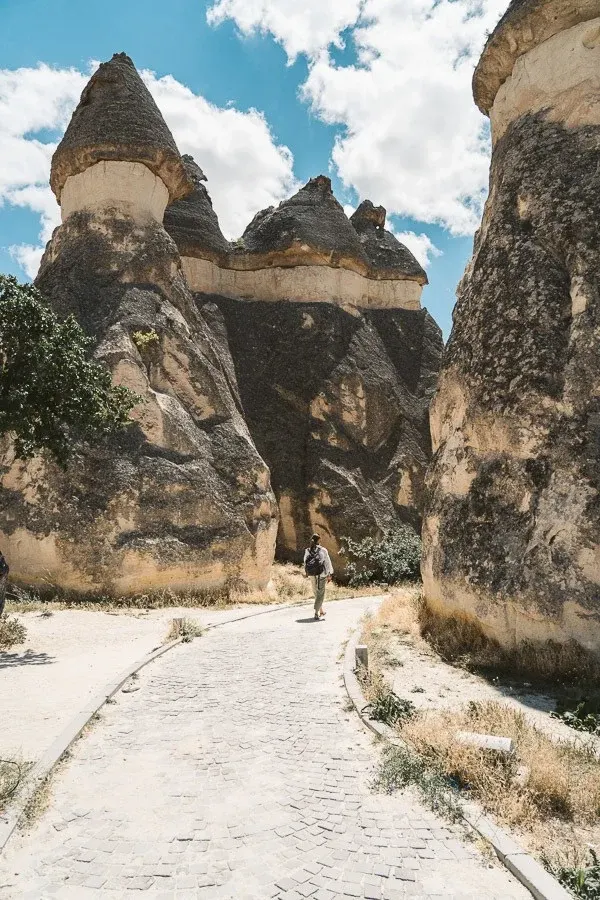
The valley’s fairy chimneys formed millions of years ago from volcanic ash and lava deposited by eruptions from nearby Mount Erciyes and Mount Hasan. Over time, wind and water erosion sculpted the soft tuff rock into tall columns capped by harder basalt stone. Pasabag is unique for its twin and triple-headed chimneys, some exceeding 10 meters high, which lend the landscape its otherworldly, mushroom-like appearance.
Historical and cultural significance
During the Byzantine era, hermitic monks inhabited Pasabag’s chimneys, carving out chapels and dwellings within the soft rock. The most famous is the chapel dedicated to Saint Simeon Stylites, who practiced extreme asceticism and inspired later hermits to live in seclusion here. Frescoes depicting his life remain faintly visible in the chapel interiors.
Visiting experience
Pasabag Valley lies about 6 km from Göreme and 5 km from Avanos, accessible by car, public bus, or guided tour. Trails weave among vineyards and rock spires, offering panoramic viewpoints and access to cave dwellings. The best light for photography occurs at sunrise or sunset, when the tuff formations glow in warm tones. An entry ticket also covers nearby Zelve Open Air Museum.
Tourism and preservation
Today, Pasabag ranks among Cappadocia’s most photographed sites and a key stop on regional tours. As part of a protected heritage zone, visitors are encouraged to stay on marked paths and avoid climbing the fragile rock structures to preserve this rare geological and cultural landscape.
Key facts
Location: Between Göreme and Avanos, Türkiye
Elevation: ~1,040 meters above sea level
Also known as: Monks Valley (Paşabağ Vadisi)
Notable feature: Multi-headed fairy chimneys and the chapel of St. Simeon
UNESCO status: Within Göreme National Park and Rock Sites of Cappadocia
4 guided tours include a stop at Pasabag (Monks Valley).
Browse all Cappadocia attractions